| Step | When |
|---|---|
| Start seeds indoors | 6-8 weeks before last frost date |
| Transplant outdoors | 2 weeks after last frost date |
| Direct sow (warm climates) | When soil is consistently 15C (60F)+ |
Tomatoes are frost-tender and need soil temperature of at least 15C to establish roots.
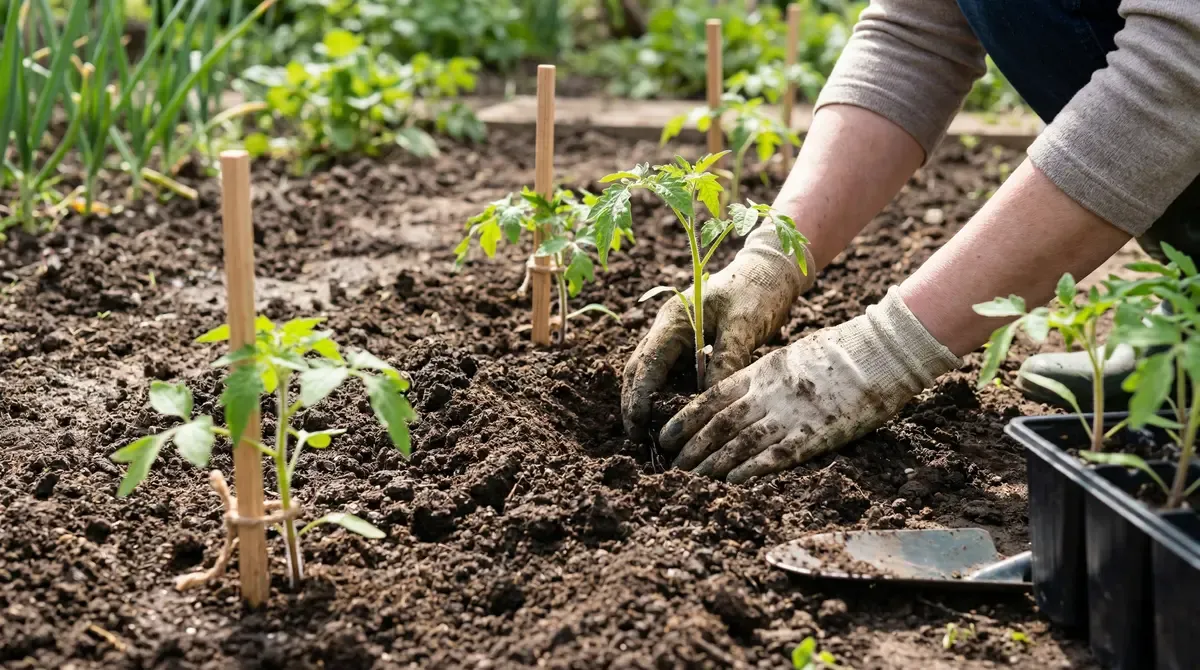
Three years ago I lost an entire tray of tomato seedlings to a frost that arrived on the 14th of May. I had transplanted them the weekend before, convinced that spring had arrived for good. The forecast had been mild all week. Then a cold front swept in overnight, temperatures dropped to minus two, and by morning every plant was blackened and limp. Six weeks of indoor growing, gone in a single night.
That was the year I stopped guessing and started paying attention to the actual data behind planting dates.
Timing is the single most important decision you make with tomatoes. Get it right and the plants establish fast and produce fruit before autumn closes the window. Get it wrong and you either lose them to frost or waste weeks waiting for stunted plants to recover from cold soil.
The quick answer
If you want a number before the detail, here it is.
- Start seeds indoors: 6 to 8 weeks before your last frost date
- Transplant outdoors: 2 weeks after your last frost date
- Direct sow (warm climates only): when soil is consistently 15C (60F) or above
Everything in this article is built around those three timings. The rest is about finding your specific dates and handling the situations where things do not go to plan.
Finding your last frost date
Your last frost date is the foundation of every tomato planting schedule. Without it, you are working from calendar dates that may not match your climate at all.
The last frost date is a statistical average: the date after which there is a 50% chance of no more frost. It is not a guarantee. In any given year, the real last frost could arrive two weeks earlier or three weeks later. But it gives you a centre point to plan around, and that is far better than guessing.
In the UK, the Met Office and RHS publish regional frost date ranges. In the US, NOAA climate normals provide station-level data going back decades. The Frost Date Finder on Leaftide shows your local dates based on your postcode or zip code, which saves digging through government databases.
Once you have your date, everything else is arithmetic. Count backwards for indoor sowing. Count forwards for transplanting. The last frost date guide goes deeper into what the numbers mean and how to interpret them for your specific microclimate.
Starting tomato seeds indoors
Tomatoes need a long season to produce ripe fruit. In most temperate climates, that season is not long enough if you direct sow into the ground. Starting seeds indoors gives you a six to eight week head start, which is often the difference between a harvest and a pile of green fruit at the end of October.
Count back six to eight weeks from your last frost date. That is your indoor sowing window. If your last frost date is 15 May, you sow indoors between late March and early April. If it is 1 June, you sow in mid to late April.
Six weeks is enough for most situations. I used to start at eight weeks, thinking the extra time would give me bigger, stronger transplants. What I actually got was leggy, root-bound plants that took longer to recover after transplanting than the ones started two weeks later. The younger transplants caught up within a fortnight and often outperformed the older ones.
What tomato seedlings need indoors:
- Warmth for germination: 20 to 25C (68 to 77F). A heated propagator or warm airing cupboard works well. Tomato seeds germinate in 5 to 10 days at this temperature range.
- Light after germination: as much as possible. A bright south-facing windowsill is adequate from March onwards. Earlier than that, supplemental grow lights prevent the leggy, stretched growth that comes from low winter light.
- Potting up: move seedlings into individual 9cm pots once they have their first true leaves. This gives the roots room to develop without becoming pot-bound before transplanting day.
The seed starting indoors guide covers the full process for tomatoes and other crops, including how to manage the countdown for different vegetables at the same time.
The step most people skip: hardening off
This is where impatience costs people their plants. You have spent six weeks nurturing seedlings indoors. The weather looks warm. The temptation is to carry them straight outside and plant them in the ground. Do not do this.
Indoor seedlings have never experienced wind, direct sun, or temperature swings. Their stems are soft. Their leaves are not adapted to UV exposure. Moving them straight from a windowsill to the garden is a shock that causes wilting, sunburn, and sometimes death, even when temperatures are well above freezing.
Hardening off is the process of gradually introducing seedlings to outdoor conditions over 7 to 10 days. It is not complicated, but it does require patience.
A simple hardening off schedule:
- Days 1 to 3: place seedlings outside in a sheltered, shaded spot for 2 to 3 hours. Bring them in at night.
- Days 4 to 6: increase outdoor time to 4 to 6 hours. Introduce some direct morning sun. Still bring them in overnight.
- Days 7 to 9: leave them out all day in increasing sun. Bring in only if night temperatures drop below 10C.
- Day 10: leave them out overnight if no frost is forecast. They are ready to plant.
I know this feels like a lot of fuss. I skipped it my first two years and lost plants both times. Not to frost, just to the shock of going from a warm kitchen to an exposed garden bed. Now I treat hardening off as non-negotiable, and the transplants establish faster because of it.
Your sowing and transplant dates, calculated for your location.


When to transplant tomatoes outdoors
The standard advice is two weeks after your last frost date. That buffer accounts for the years when frost arrives a bit late and for the fact that tomatoes do not just need frost-free air. They need warm soil.
Soil temperature is the factor most people overlook. Air temperature can hit 20C on a sunny April day while the soil is still sitting at 10C. Tomatoes planted into cold soil do not die, but they do not grow either. The roots stall, the plant sits dormant, and it becomes vulnerable to soil-borne diseases that thrive in cool, wet conditions. Meanwhile, a tomato planted two weeks later into 15C soil will overtake it within days.
How to check soil temperature:
Push a soil thermometer 10cm into the ground and check it in the morning, when the soil is at its coolest. If it reads 15C or above, you are good to go. If it is below that, wait. Raised beds and south-facing plots warm up faster than open ground, so check the specific spot where you plan to plant.
I keep a cheap soil thermometer stuck in my main tomato bed from April onwards. It takes ten seconds to check each morning, and it has saved me from planting too early more than once.
Regional timing guide
Frost dates and soil temperatures vary enormously by region. Here is a general guide for the most common growing areas. Adjust based on your specific microclimate, elevation, and aspect.
United Kingdom
- South and southeast England: last frost typically mid April to early May. Transplant outdoors from mid to late May.
- Midlands and southwest: last frost late April to mid May. Transplant from late May to early June.
- Northern England and Scotland: last frost mid May to early June. Transplant from early to mid June. Choose faster-maturing varieties.
- Indoor sowing across the UK: mid March to mid April for most areas.
Northern United States and Canada (zones 3 to 5)
- Last frost: mid May to early June depending on zone.
- Transplant outdoors: late May to mid June.
- Indoor sowing: late March to mid April.
- Season length is tight. Choose varieties under 75 days to maturity and consider using black plastic mulch or cloches to warm the soil faster.
Southern United States (zones 7 to 9)
- Last frost: mid March to mid April.
- Transplant outdoors: early April to early May.
- Indoor sowing: late January to early March.
- Summer heat is the challenge here, not cold. In zones 8 and 9, tomatoes often stop setting fruit when daytime temperatures exceed 35C. Many southern growers plant early and aim for a harvest before the worst of summer, then plant again in late summer for an autumn crop.
Mediterranean and southern Europe
- Last frost: February to mid March in coastal areas. Late March to April inland.
- Transplant outdoors: March to April for coastal gardens. April to May inland.
- Direct sowing is viable in many Mediterranean climates once soil temperatures are consistently above 15C.
The crop timeline calculator generates a personalised schedule for your location, taking your frost dates and growing season length into account.
Signs your soil is ready
Calendar dates and frost averages are useful starting points, but the soil itself gives you the most reliable signals. Learning to read them saves you from planting into ground that is not ready, regardless of what the calendar says.
Soil temperature at 15C or above. This is the most important indicator. Use a thermometer. Do not guess based on air temperature, because the two can differ by 10C or more in spring.
The soil is workable, not waterlogged. Squeeze a handful of soil. If water drips out, it is too wet. If it crumbles apart easily, it is ready. Planting into saturated soil compacts it around the roots and creates the anaerobic conditions that cause root rot.
Weeds are growing. This sounds counterintuitive, but weed growth is a reliable sign that the soil has warmed enough to support active plant growth. If nothing is germinating in your beds, the soil is probably still too cold for tomatoes.
Consistent night temperatures above 10C. Tomatoes grow actively when nights stay above 10C (50F). Below that, growth slows dramatically. A few cold nights will not kill established plants, but persistent cool nights mean the soil is not warming up during the day either.
What to do if you planted too early
It happens. The forecast looked good, you got excited, and now temperatures are dropping. Here are your options, roughly in order of effort.
Cover them. Horticultural fleece draped over stakes or hoops protects against light frost (down to about minus 2C). Double-layer fleece gives a couple more degrees of protection. Remove it during the day so the plants get light and air.
Use cloches or bottles. Cut the bottom off large plastic bottles and place them over individual plants. This creates a mini greenhouse effect. Effective for small plantings but impractical for a full bed.
Water the soil before a frost night. Wet soil holds heat better than dry soil and releases it slowly overnight. This is not a miracle cure, but it can make the difference of a degree or two.
Accept the loss and replant. If the plants are badly damaged, it is often faster to start again with new transplants than to nurse damaged ones back to health. A healthy transplant put in two weeks later will almost always outperform a frost-damaged one that was planted early.
Planting too early rarely saves time. The plants I have rushed into the ground have never outperformed the ones I waited for. Patience is not exciting, but it works.
If you are wondering whether it is too late rather than too early, the is it too late guide covers that question for tomatoes and other crops.
Putting it together
The timing for tomatoes comes down to three numbers: your last frost date, six to eight weeks before it for indoor sowing, and two weeks after it for transplanting. Add a soil thermometer check and a proper hardening off period, and you have covered the decisions that matter most.
Once your tomatoes are in the ground at the right time, spacing becomes the next question. The tomato spacing guide covers how far apart to plant them based on variety and growing method.
Good timing will not guarantee a perfect harvest. Weather is weather. But it removes the most common reason tomato crops fail, which is putting plants outside before conditions are ready for them.
Stop guessing your tomato dates.