How to Grow Rue
Ruta graveolens
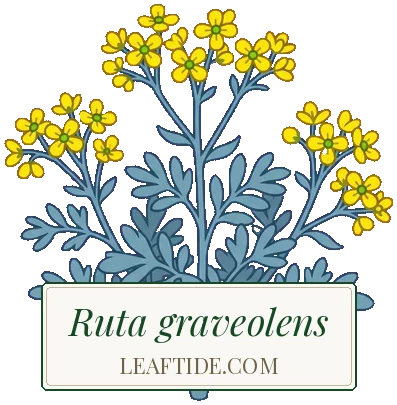
Rue is a tough, drought-tolerant, semi-evergreen sub-shrub that asks for very little. Give it a hot, sunny spot with sharply-drained, poor to average soil, as it will sulk in rich, wet ground. Never cut into old wood when pruning; always trim back to fresh green growth in spring. Handle with care: rue sap causes serious phototoxic skin reactions in sunlight. Always wear gloves.
 In your Leaftide garden


- Height
- 60 cm (24 in)
- Spread
- 50 cm (20 in)
- Spacing
- 50 cm (20 in)
- Light
- Full sun
- Water
- Low
- Feed
- Avoid feeding
Yearly Lifecycle
Care Essentials
Rarely feed: rue thrives on poor, lean soil. Rich feeding produces weak, floppy growth. A light potash in spring on very poor soils is the maximum.
Watch For
- Root rot in waterlogged soil
- Scale insects
- Aphids (occasional)
Companions
Roses, Brassicas, Figs
Pet Safety
Care Requirements
Light
Full sun; hot and sheltered position
Needs as much sun as possible. Thrives in a warm, dry, sheltered spot. Will not perform well in shade or damp, cold positions.
Watering
Drought-tolerant once established; minimal watering needed
Water during the first season to establish roots. Once established, rue needs very little water. Overwatering or poor drainage leads to root rot.
Fertilizing
Avoid feeding; poor soil is preferred
Rich soil produces weak, floppy, disease-prone plants. On very poor soils only, a light potash dressing in spring is acceptable.
Pruning
Light spring trim to green growth; never into old wood
In spring, cut stems back by up to one third to just above fresh green growth. Rue will not regenerate from old woody stems, so cutting too hard kills the plant.
Spacing
45–60 cm (18–24 in) apart
Space 50 cm (20 in) apart in well-drained soil. Good spacing improves air circulation and reduces the chance of root rot in wetter conditions.
Growing Tips
If the sap touches your skin
Wash the area with soap and cool water straight away and keep it covered and out of sunlight for a couple of days. Blisters can appear a day or two after contact, and darker marks can last for months. See a doctor if the blistering is severe.
Replace old plants
Rue goes woody and sparse after about four or five years and cannot be renewed by hard cutting. Take semi-ripe cuttings in summer or sow seed to keep young plants coming.
Caterpillars on the leaves
In North America, black swallowtail caterpillars feed on rue. The damage is slight, so leave them be if you want the butterflies, and wear gloves if you need to move them.
Pests & Diseases
Disease Root rot
Symptoms: Grey-green foliage yellows and wilts, stems blacken near the base and the plant dies back in wet, heavy soil, especially through winter.
Treatment: Cut back affected stems, lift the plant, trim away rotten roots and replant in gritty ground or a pot with sharp drainage. Badly rotted plants rarely recover, so take cuttings from healthy shoots as a backup.
Prevention: Plant in sharply drained soil, on a slope or in a raised bed, and mulch with grit rather than bark or compost against the stems.
Spacing & Planting
| Plant spacing | 50 cm (20 in) |
| Row spacing | 60 cm (24 in) |
| Mature height | 60 cm (24 in) |
| Mature spread | 50 cm (20 in) |