How to Grow Kangaroo Apple
Solanum laciniatum
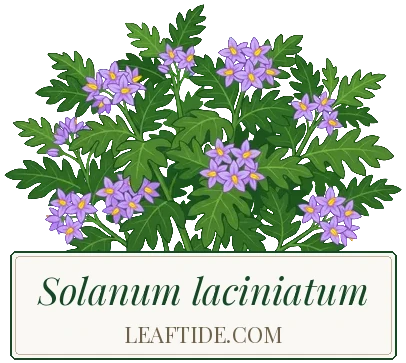
Kangaroo Apple is a fast-growing Australian shrub producing purple flowers in summer followed by egg-shaped fruits that ripen yellow-orange. Not frost hardy: overwinter in a frost-free greenhouse or bring containers indoors. Plant in full sun, in moist but well-drained soil. Feed regularly during the growing season. Fruits are edible only when fully ripe; unripe green fruits are toxic.
 In your Leaftide garden


- Height
- 3 m (10 ft)
- Spread
- 2 m (6.5 ft)
- Light
- Full sun
- Water
- Moderate
- Prune
- Pinch tips in spring
Yearly Lifecycle
Care Essentials
Feed every 2-4 weeks with a balanced liquid fertiliser during the growing season (spring to late summer). Stop feeding in autumn and winter.
Watch For
- Frost damage (not frost hardy)
- Aphids on new growth
- Whitefly under glass
- Red spider mite in dry conditions
Pet Safety
Care Requirements
Light
Full sun, sheltered position
Requires full sun for best flowering and fruiting. Choose a warm, sheltered spot protected from cold winds. In cooler areas, grow against a warm, sunny wall or in a conservatory.
Watering
Regular watering in growing season; reduce in winter
Water regularly and deeply during spring and summer: the plant is not drought-tolerant. Keep soil consistently moist but well-drained. Reduce watering significantly in winter to barely moist.
Fertilizing
Balanced liquid feed every 2-4 weeks spring to summer
Feed every 2-4 weeks with a balanced liquid fertiliser during the active growing season. High nutrient demand due to rapid growth. Stop feeding entirely from autumn through winter.
Pruning
Pinch tips in spring; cut back hard before overwintering
Pinch out growing tips in late spring to encourage bushy growth. Before moving indoors for winter, cut back the canopy by up to two-thirds. Remove dead or damaged wood when growth resumes in spring.
Growing Tips
Unripe fruit is toxic
The fruits turn yellow-orange when ripe and are edible only then. Green, unripe fruits are toxic, so keep them away from children and pets.
Plan to replace it
It grows very fast, up to 2 m (6.5 ft) in a season in good conditions, but lives only 5 to 6 years. Raise a few replacement plants from seed before the old one declines.
Overwinter under cover
It is not frost hardy. Where winters bring frost, grow it in a large pot so you can move it into a frost-free greenhouse or conservatory.
Pests & Diseases
Disease Frost Damage
Symptoms: Leaves and soft shoots blacken and wilt after frost, and a hard frost can kill the whole plant. It is not frost hardy.
Treatment: Leave blackened growth until new growth appears in warm weather, then cut it back to healthy wood. Overwinter potted plants in a frost-free greenhouse or conservatory.
Prevention: Grow in a large pot you can move under cover, or in the warmest sheltered spot, and protect with fleece when frost is forecast.
Disease Root Rot
Symptoms: Leaves yellow and wilt and the base of the stem darkens because the roots have rotted in wet soil. It is most likely in pots over winter or in heavy ground.
Treatment: Stop watering and let the compost dry. Repot into fresh, free-draining compost, cutting away brown, mushy roots. A plant with most of its roots rotted rarely recovers.
Prevention: Use moist but well-drained soil, pots with drainage holes, and water less in winter.