How to Grow Exochorda
Exochorda × macrantha
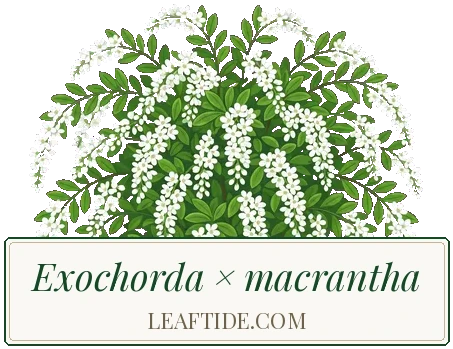
Exochorda × macrantha (Pearl Bush) is a stunning deciduous shrub that produces cascading racemes of pure white flowers in late spring. Plant in full sun to light shade in any well-drained soil; it dislikes shallow chalk. Once established it needs very little attention. The key rule is to prune immediately after flowering, since blooms form on the previous year's wood. An arching, graceful habit makes it ideal as a specimen shrub or at the back of a mixed border.
 In your Leaftide garden


- Height
- 1.8 m (6 ft)
- Spread
- 2.2 m (7 ft)
- Flowers
- April - June
- Light
- Full sun to part shade
- Water
- Moderate
- Prune
- Prune after flowering
Yearly Lifecycle
Care Essentials
In spring with a balanced fertiliser as new growth begins. Avoid high-nitrogen feeds which promote foliage at the expense of flowers.
Watch For
- Aphids on new growth
- Coral spot on dead wood
- Chlorosis on alkaline soils
Companions
Spiraea, Weigela, Philadelphus, Viburnum
Care Requirements
Light
Full sun for best flowering; tolerates light shade
Full sun produces the best flowering. Tolerates light dappled shade but fewer flowers will be produced. Avoid deep shade.
Watering
Regular watering while establishing; drought tolerant once mature
Water regularly during the first two years while establishing. Once established, exochorda is reasonably drought tolerant. Water deeply during prolonged dry spells in summer.
Fertilizing
Balanced feed in early spring; avoid high nitrogen
Apply a balanced general-purpose fertiliser in early spring as buds begin to swell. Avoid high-nitrogen feeds which promote leafy growth at the expense of flowers.
Pruning
Prune after flowering; remove oldest stems annually
Prune immediately after flowering in late spring or early summer. Cut back flowered shoots to strong new growth. Remove one in five of the oldest stems at the base each year to maintain vigour and an open framework.
Mulching
Spring mulch with compost; keep clear of stem base
Mulch in spring with garden compost or well-rotted manure to conserve moisture and suppress weeds. Keep mulch away from the stem base to prevent rot.
Growing Tips
Prune after flowering only
Exochorda flowers on the previous year's wood. Pruning before or during flowering removes next year's blooms. Always wait until flowers have faded, then cut back flowered shoots.
Give it space to arch
The natural habit is gracefully arching. Avoid cramming it against a wall or fence where the branches cannot cascade freely. Allow at least 2m (6.5 ft) spread.
Avoid shallow chalk
While tolerant of most soils, exochorda dislikes thin chalky ground which causes leaf yellowing. On alkaline soils, add ericaceous compost at planting and mulch with acidic material.
Pests & Diseases
Pest Aphids
Identification: Clusters of small green insects on soft new shoot tips and flower buds in spring, with sticky honeydew and curled leaf tips.
- Rub colonies off by hand or wash them away with a strong jet of water.
- Spray insecticidal soap on bad infestations, covering the leaf undersides.
- Leave ladybirds and hoverflies to clear light attacks as the shrub comes into flower.
Disease Coral Spot Nectria cinnabarina
Symptoms: Small, raised, coral-pink pustules on dead twigs and stubs, sometimes spreading into live wood and causing dieback.
Treatment: Cut out affected stems back to clean, healthy wood and bin or burn the prunings. Disinfect your secateurs between cuts.
Prevention: Prune out dead wood promptly and cut cleanly just above a bud, leaving no stubs. Dead stems left on the shrub are where the fungus starts.
Disease Lime-Induced Chlorosis
Symptoms: New leaves turn pale yellow between green veins, in severe cases with brown leaf edges and stunted growth. It occurs on shallow chalky or very alkaline soil, where iron is locked up.
Treatment: Feed with chelated (sequestered) iron or an ericaceous feed through the growing season, and mulch with leaf mould or compost. Recovery is slow but steady.
Prevention: Plant in neutral to slightly acid soil with plenty of organic matter. On shallow chalk, choose another shrub or plant in a large pit of improved soil, and avoid lime-rich water.