How to Grow Elaeagnus
Elaeagnus × ebbingei
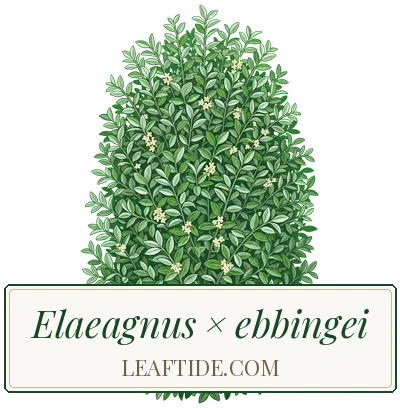
Elaeagnus is a tough, fast-growing evergreen that makes an excellent hedge or windbreak. It thrives in most soils including poor, dry, and coastal conditions. The tiny autumn flowers are insignificant but intensely fragrant. Variegated cultivars like 'Gilt Edge' and 'Limelight' add year-round colour. Prune in late spring to keep in bounds; it responds well to hard cutting.
 In your Leaftide garden


- Height
- 3 m (10 ft)
- Spread
- 3 m (10 ft)
- Flowers
- October - December
- Light
- Full sun to part shade
- Water
- Low
- Feed
- Rarely needed
Yearly Lifecycle
Care Essentials
Rarely needed. Mulch with compost in spring for hedging plants to maintain vigour.
Watch For
- Reversion (green shoots on variegated forms)
- Coral spot on dead wood
- Elaeagnus sucker growth
Pet Safety
Care Requirements
Light
Full sun to partial shade
Thrives in full sun or partial shade. Tolerates exposed and coastal positions. Variegated forms colour best in brighter light.
Watering
Drought-tolerant once established
Very drought-tolerant once established. Water only during prolonged dry spells in the first year or two. Mature plants rarely need supplemental water.
Fertilizing
Rarely needed
Thrives in poor soils without feeding. Mulch hedging plants with compost in spring to maintain vigour if soil is very depleted.
Pruning
Late spring, trim hedges twice yearly
Trim to shape in late spring after the main growth flush. For hedges, a second lighter trim in late summer. Remove reverted green shoots immediately on variegated forms.
Growing Tips
Prune in late spring
Elaeagnus x ebbingei flowers in autumn, so prune it in late spring or summer, never in autumn or winter. Trim hedges and cut back overgrown shrubs then; it regrows readily from old wood.
Small flowers, strong scent
The silvery-white autumn flowers are small and easy to miss, but sweetly scented. Plant it near a path, gate or window to get the benefit.
A tough screen for wind and coast
Evergreen, wind-resistant and tolerant of salt spray and poor, dry soil, it makes a good shelter hedge or coastal screen. It copes with sun or part shade.
Pests & Diseases
Disease Reversion to Green
Symptoms: Plain green shoots appear on a variegated form. They grow more vigorously than the variegated growth and can take over the shrub.
Treatment: Cut each green shoot right back to where it grows from, as soon as you see it.
Prevention: Check variegated forms through spring and summer and remove green shoots while they are small.
Disease Coral Spot Nectria cinnabarina
Symptoms: Small, raised, coral-pink pustules on dead twigs and branches. The fungus can spread from dead wood into living wood through wounds and cause dieback.
Treatment: Prune affected branches well below the pustules into healthy wood, and bin the prunings.
Prevention: Prune with clean, sharp tools, cutting just above a bud or branch, and clear dead wood regularly.