How to Grow Dracaena
Dracaena marginata
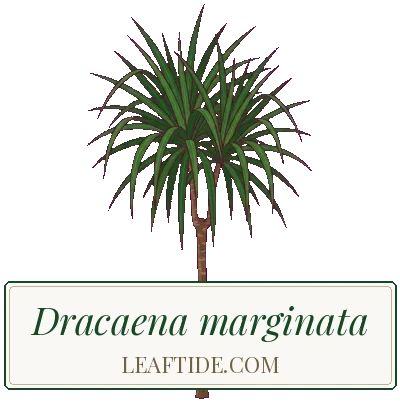
Dracaena is a striking, low-maintenance houseplant that tolerates lower light levels better than most tropical plants, making it ideal for spots away from windows. It prefers filtered light, moderate watering, and temperatures above 10 °C (50 °F) year-round. The standout tip is to use rainwater or filtered water: fluoride in tap water accumulates over time and causes the brown leaf tips dracaena is notorious for.
 In your Leaftide garden


- Height
- 1.5 m (5 ft)
- Spread
- 60 cm (24 in)
- Light
- Bright indirect light
- Water
- Moderate
Yearly Lifecycle
Care Essentials
Feed monthly with a balanced liquid fertiliser during spring and summer. Do not feed in autumn or winter: dracaena grows slowly and excess fertiliser causes brown leaf tips.
Watch For
- Spider mites: fine webbing and stippled yellowing leaves in dry air
- Scale insects on stems and leaf bases
- Mealybug in leaf axils
- Fluoride toxicity: brown leaf tips from tap water or fertiliser
Pet Safety
Care Requirements
Light
Bright indirect to low light
Prefers filtered light and tolerates lower light levels than most tropical plants. Avoid direct sunlight which scorches leaves. Ideal for positions away from windows.
Watering
Moderate, allow top to dry
Water when the top few centimetres of soil feel dry. Use rainwater or filtered water to avoid fluoride damage. Reduce to every two to three weeks in winter.
Fertilizing
Monthly in spring and summer
Feed monthly with balanced liquid fertiliser during the growing season. Stop entirely in autumn and winter. Excess fertiliser causes brown leaf tips.
Growing Tips
Keep it away from cats and dogs
Dragon tree is toxic to cats and dogs. The saponins in the leaves can cause vomiting, drooling, loss of appetite and, in cats, dilated pupils. Stand it where pets can't chew the leaves.
Cut back a leggy stem
When a stem gets too tall or bare, cut it at the height you want. New leaves sprout below the cut, often as two or more shoots, so the plant becomes bushier. The cut-off top can be rooted as a cutting.
More light, more colour
It survives in low light, but the red leaf edges of Dracaena marginata and its coloured forms are stronger in bright, indirect light, and leaves grown in brighter light are thicker and sturdier. Keep it out of hot direct sun, which scorches the leaves.
Pests & Diseases
Pest Spider Mites
Identification: Fine pale stippling and yellowing on the leaves and, in bad cases, fine webbing, mostly in warm, dry indoor air. The mites are tiny: check the leaf undersides with a hand lens.
- Rinse the plant in the shower, including the undersides of the leaves, to knock the mites off.
- Raise the humidity around the plant; spider mites thrive in dry air.
- Spray with insecticidal soap or a plant-oil spray every 5-7 days for a few weeks.
Pest Mealybugs
Identification: White, cottony clusters in the leaf axils and where the leaves join the stem, often with sticky honeydew on the leaves below.
- Wipe off the clusters with a cotton bud dipped in rubbing alcohol.
- Spray with insecticidal soap and repeat weekly until no new clusters appear.
- Keep the plant away from your other houseplants until it is clean.
Pest Scale Insects
Identification: Small brown, flat or domed bumps on the stems and leaf bases that do not move, with sticky honeydew and black sooty mould.
- Scrape the scales off with a fingernail or a soft brush dipped in soapy water.
- Spray with a fatty-acid or plant-oil spray to catch the young crawlers, repeating weekly for a few weeks.
Disease Brown Leaf Tips
Symptoms: Leaf tips and edges turn yellow, then brown and dry. Dragon tree is very sensitive to fluoride, and dry air, overfeeding and salt build-up in the compost cause the same symptom. Damaged tissue does not recover.
Treatment: Trim the brown tips with clean scissors, following the shape of the leaf. Flush the pot with plenty of rainwater or filtered water to wash out built-up salts, and feed less.
Prevention: Water with rainwater or filtered water and feed only in spring and summer. Avoid potting mixes with a lot of perlite and fertilisers containing superphosphate, both common sources of fluoride.
Disease Root Rot
Symptoms: Lower leaves yellow and drop, the stem goes soft at the base and the compost smells sour. Caused by a mix that drains slowly or by watering too often.
Treatment: Take the plant out of its pot, cut away soft, dark roots and repot into fresh, free-draining mix. If the stem base has gone soft, root the healthy tops as cuttings instead.
Prevention: Let the top few centimetres of compost dry before watering and never leave the pot standing in water.
Disease Cold Damage
Symptoms: Pale bands across the leaves after a few hours close to freezing, or soft, dark spots and sudden heavy leaf drop after a chill, for example against cold glass or in a draught.
Treatment: Move the plant somewhere warm and draught-free and cut off badly damaged leaves. Damaged leaves do not recover, but new ones grow from the tips.
Prevention: In winter keep it away from cold windowpanes, outside doors and draughts, and don't water it with cold water.