How to Grow Bougainvillea
Bougainvillea glabra
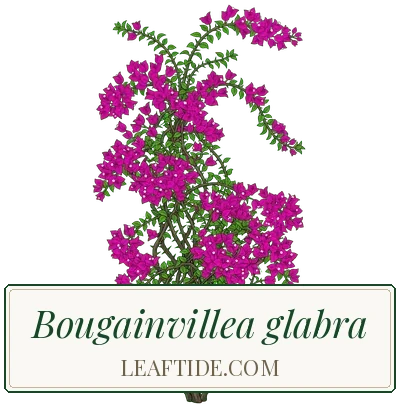
Bougainvillea is a vigorous tropical climber prized for its masses of colourful papery bracts. In the UK it must be grown in a container and overwintered in a frost-free spot. Plant in a loam-based compost with sharp drainage and place in the hottest, sunniest position available. Water freely in summer but allow the compost to dry between waterings: slight drought stress triggers heavier flowering. Feed monthly with a high-potash fertiliser. Prune after flowering to keep the plant manageable. Move indoors before the first frost and keep almost dry until spring.
 In your Leaftide garden


- Height
- 5 m (16 ft)
- Spread
- 3 m (10 ft)
- Flowers
- May - October
- Light
- Full sun
- Water
- Low
Yearly Lifecycle
Care Essentials
Feed monthly with a high-potash fertiliser during the growing season. Stop feeding in autumn to encourage dormancy.
Watch For
- Aphids on new growth
- Mealybugs in leaf axils
- Leaf spot in damp conditions
Care Requirements
Light
Full sun, hottest spot available
Needs the hottest, sunniest position you can offer. Against a warm, sunny wall is ideal. In shade it produces leaves but few or no colourful bracts.
Watering
Sparingly, allow to dry between waterings
Water freely in summer but allow compost to dry between waterings. Slight drought stress triggers heavier flowering. Almost dry in winter to prevent root rot.
Fertilizing
Monthly high-potash during growing season
Feed monthly with a high-potash fertiliser from spring through summer to promote bract production. Stop feeding in autumn to encourage dormancy.
Pruning
Late winter, shorten long shoots
Prune in late winter or early spring, before new growth starts. Shorten long shoots by a third and remove dead or crossing branches. Hard pruning in spring is tolerated if overgrown.
Growing Tips
Stress it for more colour
Bougainvillea flowers best when slightly pot-bound and allowed to dry out between waterings. Overwatering and overpotting produce lush green growth at the expense of bracts.
Full sun is non-negotiable
This plant needs the hottest, sunniest spot you can offer. Against a warm, sunny wall is ideal. In shade it produces leaves but few or no bracts.
Overwinter cool and dry
Move indoors before the first frost. A cool conservatory or frost-free greenhouse at 5-10 °C (41-50 °F) is ideal. Water sparingly: just enough to stop stems shrivelling. Some leaf drop is normal.
Pests & Diseases
Pest Mealybugs
Identification: Clusters of white, waxy, cottony egg sacs on shoot tips, stems and the undersides of leaves, with sticky honeydew, sooty mould and often ants. Heavy colonies brown the leaves and kill shoot tips.
- Cut out and bin heavily infested shoots, then wipe off the rest with a cotton bud dipped in soapy water.
- Under glass in summer, release the mealybug ladybird (Cryptolaemus montrouzieri), which needs at least 20 °C (68 °F) for a few hours a day.
- Check new plants closely before you buy them or bring them into a greenhouse or conservatory.
- For bad infestations on plants under glass, spray with a fatty acid or maltodextrin product, or an acetamiprid insecticide, following the label.
Pest Red Spider Mite
Identification: Fine pale speckling on the leaves, which turn dull and bronzed, with fine webbing between leaves and shoots. Tiny mites are visible on the undersides with a hand lens. Worst under hot, dry glass.
- Raise the humidity by damping down the greenhouse floor and misting in hot, bright weather.
- Release the predatory mite Phytoseiulus persimilis under glass from spring, before numbers build up.
Pest Bougainvillea Looper
Identification: Yellowish-green to brown inchworm caterpillars, up to 2.5 cm (1 in) long, that feed at night. Young leaves and shoot tips get scalloped edges and dark droppings collect on the leaves below. Found in the Americas, including California and Florida, not in Europe.
- Pick caterpillars off at dusk; birds and other natural enemies often keep numbers down.
- Spray Bacillus thuringiensis while the caterpillars are still small: it works only on young caterpillars.
Disease Bacterial Leaf Spot
Symptoms: Small reddish-brown spots on young leaves that grow into dark patches with a tan centre and a dark red rim. In wet weather leaves become ragged and fall.
Treatment: Remove and bin spotted leaves and fallen debris. Keep water off the foliage until new growth comes through clean.
Prevention: Water the compost, not the leaves, and give the plant room so the foliage dries quickly. Avoid overhead sprinklers on garden plants.
Disease Leaf Drop
Symptoms: Leaves yellow and fall in a few days, often after a drop in temperature, a move to a darker spot or repotting. The stems stay green and firm.
Treatment: Leaf loss in a cool winter is normal if the stems stay firm: keep the compost almost dry and new leaves appear in spring. Scratch a stem with a fingernail; green underneath means it is alive.
Prevention: Keep a minimum night temperature of 10 °C (50 °F) if you want the plant to hold its leaves over winter. Repot only when needed, and never tease out or prune the roots: their fine root system resents disturbance.