How to Grow Tree Peony
Paeonia suffruticosa
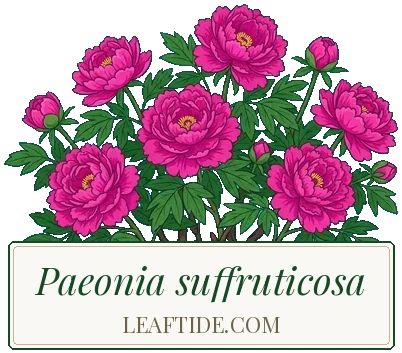
Tree peonies are woody deciduous shrubs producing spectacular large flowers in late spring. Plant in well-drained, fertile soil in a sheltered spot with morning sun and afternoon shade. Avoid exposed east-facing positions where early sun thaws frosted buds too quickly. Unlike herbaceous peonies, do not cut back the stems in autumn; the woody framework is permanent. Prune only dead wood after flowering. Feed with bone meal or balanced fertiliser in spring. Very long-lived once established.
 In your Leaftide garden


- Height
- 1.75 m (5.5 ft)
- Spread
- 1.5 m (5 ft)
- Spacing
- 1.5 m (5 ft)
- Flowers
- May - July
- Light
- Full sun to part shade
- Water
- Moderate
Yearly Lifecycle
Care Essentials
In spring after flowering, with a balanced slow-release fertiliser or bone meal worked into the soil surface.
Watch For
- Peony wilt (Botrytis paeoniae)
- Honey fungus
- Scale insects
- Leaf blotch
Companions
Hostas, Japanese Maples, Hellebores, Ferns
Care Requirements
Light
Sheltered position with morning sun or dappled shade
Prefers a sheltered spot with morning sun and afternoon shade. Avoid east-facing positions where early sun thaws frosted buds too rapidly, damaging flowers.
Watering
Moderate; drought tolerant once established
Water regularly during the first two years while establishing. Once mature, tree peonies are reasonably drought tolerant. Avoid waterlogged soil which causes root rot.
Fertilizing
Feed once in spring after flowering
Apply bone meal or a balanced slow-release fertiliser after flowering in late spring. Avoid high-nitrogen feeds which promote soft growth at the expense of flowers.
Pruning
Dead wood only, after flowering
Remove only dead, damaged, or crossing branches after flowering. Never cut back hard or to ground level. The permanent woody framework carries next year's blooms.
Spacing
150 cm (5 ft) between plants
Space plants 150 cm (5 ft) apart to allow the mature spread. Allow 180 cm (6 ft) between rows. Tree peonies resent being crowded or moved once established.
Support
None needed for established plants
Mature plants have sturdy woody stems. Young plants in windy sites may benefit from a temporary stake for the first year until the root system anchors firmly.
Growing Tips
Do not cut back in autumn
Unlike herbaceous peonies, tree peonies are woody shrubs. Never cut the stems to the ground in autumn. The permanent framework produces next year's flowers.
Shelter from morning sun
Plant where buds are shielded from early morning sun after frost. Rapid thawing damages flower buds. A west-facing wall, or any wall that catches the afternoon sun but not the early morning sun, is ideal.
Patience with young plants
Tree peonies are slow to establish and may not flower for the first year or two. Once settled, they are extremely long-lived and increasingly floriferous.
Pests & Diseases
Disease Peony Wilt Botrytis paeoniae
Symptoms: Young shoots and leaves wilt and turn brown or black in spring, with grey fuzzy mould in damp weather. Stems may rot at ground level and collapse.
Treatment: Cut affected shoots back to healthy tissue, well below the discoloured part, and bin them, not the compost. Clear away fallen leaves and debris around the plant.
Prevention: Give the shrub space and good airflow, avoid wetting the leaves, and tidy up fallen leaves and old stems in autumn.
Disease Honey Fungus Armillaria
Symptoms: Sudden wilting or dieback of a branch or the whole shrub, with white fan-shaped fungus under the bark at the base of the stem, black bootlace-like strands in the soil, and honey-coloured toadstools in autumn.
Treatment: There is no cure. Dig out the affected shrub with as much root as you can, and do not replant peonies in that soil. Choose less susceptible plants for the gap or install a barrier in the soil.
Prevention: Remove old tree stumps nearby and dig out any dead or dying woody plants promptly with their roots.
Disease Leaf Blotch
Symptoms: Purplish-brown or reddish blotches on the upper leaf surface, with grey-brown patches below, and leaves that brown and drop early. It looks poor but seldom harms the plant much.
Treatment: Pick off and bin affected leaves, and clear all fallen leaves in autumn so the spores do not overwinter.
Prevention: Allow good airflow between plants, and water at the base rather than over the leaves.
Spacing & Planting
| Plant spacing | 1.5 m (5 ft) |
| Row spacing | 1.8 m (6 ft) |
| Mature height | 1.75 m (5.5 ft) |
| Mature spread | 1.5 m (5 ft) |