How to Grow Sturt's Desert Pea
Swainsona formosa
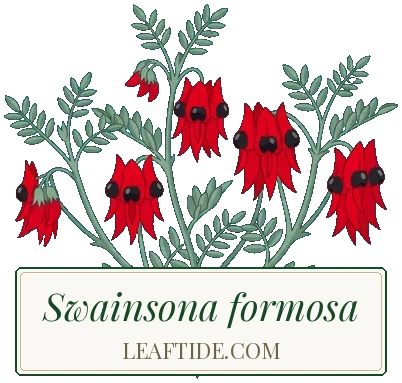
Sturt's desert pea (Swainsona formosa) is South Australia's floral emblem: a trailing annual bearing striking scarlet pea flowers with glossy black bosses. It demands full sun, perfect drainage, and low-nutrient soil; waterlogging kills it quickly. Sow seeds in biodegradable pots (to avoid disturbing the tap root) after the last frost, or direct sow in a prepared sandy bed. Avoid phosphorus fertilisers. Best suited to dry, hot conditions; challenging in humid climates.
 In your Leaftide garden
- Hardiness
- Tender
- Season
- Warm Season
- Spacing
- 50 cm (20 in)
- Height
- 20 cm (8 in)
- Min. soil temperature
- 18 °C+ (64 °F+)
- Start from
- Seed
- Light
- Full sun
- Water
- Low
When to Start
Start seeds indoors 3 weeks before your last frost date. Transplant outdoors once night temperatures stay above 10 °C (50 °F) and soil has warmed to at least 18 °C (64 °F).
Don't know your frost date? Find it here →
Growth Stages
Approximate days from start
Care Essentials
- Apply a low-phosphorus, balanced fertiliser sparingly at planting. Sturt's desert pea is adapted to poor soils and performs best with minimal feeding. Excess phosphorus is toxic to this and other Australian native plants.
- Sturt's desert pea is the floral emblem of South Australia. The striking red pea flowers with glossy black central bosses trail along the ground and are unlike any other garden flower. It demands perfect drainage and full sun, as waterlogging kills it rapidly. Sow direct or in biodegradable pots (the tap root hates disturbance). Not suitable for humid or cold climates without protection. A genuinely challenging plant outside its native arid environment, but spectacular when conditions are right.
Growing Conditions
- Min. soil temperature
- 18 °C+ (64 °F+)
- Sow indoors
- —
- Transplant out
- —
- First harvest
- —
Want your full season plan with reminders? Set up your garden free


Spacing & Planting
| Plant spacing | 50 cm (20 in) |
| Row spacing | 60 cm (24 in) |
| Mature height | 20 cm (8 in) |
| Mature spread | 1 m (3.5 ft) |
Pests & Diseases
Pest Aphids
Identification: Clusters of small green or black insects on young shoots and flower buds, with distorted growth and sticky honeydew.
- Squash small colonies by hand or rinse them off with a jet of water, keeping the soil dry.
- Encourage ladybirds, lacewings and hoverflies.
Disease Root and Stem Rot
Symptoms: Plants wilt and collapse, then the stem base and tap root turn soft and dark. This is the commonest way this plant is lost, and it follows heavy, wet or over-fed soil.
Treatment: There is no recovery once the root has rotted. Remove the plant and do not replant in the same soil or compost.
Prevention: Use very sharply drained, sandy, low-nutrient soil, water sparingly, and never let water stand around the roots.
Disease Damping Off
Symptoms: Seedlings collapse at soil level, with a thin, dark, pinched stem, in cool, damp, crowded conditions.
Treatment: Remove collapsed seedlings. Stop watering from above and let the compost dry a little. Seedlings that have already collapsed do not recover.
Prevention: Sow in clean pots with fresh, gritty compost, keep the seedlings warm and well lit, and water carefully.
Growing Conditions
| Min. soil temperature | 18 °C (64 °F) |
Frequently Asked Questions
- How far apart should I plant Sturt's desert pea?
- Plant Sturt's desert pea 50 cm (20 in) apart, with 60 cm (24 in) between rows.
- When does Sturt's desert pea flower?
- Sturt's desert pea typically flowers approximately 90 days after transplanting.
- Is Sturt's desert pea frost hardy?
- No, Sturt's desert pea is tender.