How to Grow Pleione Orchid
Pleione formosana
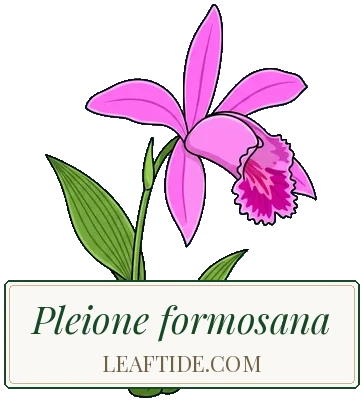
Pleione orchids grow from small pseudobulbs that produce showy pink or white flowers in early spring, often before the leaf appears. Pot up in shallow containers with free-draining orchid bark mix in late winter. Keep in a bright, cool spot: full direct sun will scorch, deep shade prevents flowering. Water sparingly when growth starts; increase as the leaf develops; reduce completely once the leaf yellows in autumn. Feed every two weeks at half-strength during the growing season, switching to a high-potash feed in late summer. Repot annually in late winter, removing old spent pseudobulbs. Store dry and cool (near freezing) over winter.
 In your Leaftide garden


- Hardiness
- Half Hardy
- Season
- Cool Season
- Spacing
- 10 cm (4 in)
- Height
- 25 cm (10 in)
- Start from
- Plug plant
- Light
- Full sun to part shade
- Water
- Moderate
When to Start
Best started from plugs, corms, or slips. Pot up indoors 3 weeks before last frost, then plant out once soil reaches 5 °C (41 °F).
Don't know your frost date? Find it here →
Growth Stages
Approximate days from start
Care Essentials
- Feed every two weeks at half-strength with a balanced orchid fertiliser once in active growth. Switch to a high-potassium feed in late summer to help ripen the new pseudobulb. Stop feeding entirely during winter dormancy.
- Pleione orchids grow from small pseudobulbs that produce a single flower spike in spring, often before the leaf emerges. They thrive in cool, bright conditions and dislike heat. Annual repotting in late winter is essential.
Growing Conditions
Pet Safety
Spacing & Planting
| Plant spacing | 10 cm (4 in) |
| Row spacing | 15 cm (6 in) |
| Mature height | 25 cm (10 in) |
| Mature spread | 20 cm (8 in) |
Space 8–12 cm (3–5 in) apart in shallow trays or half-pots. Pseudobulbs can be grown closely together in the same container.
Pests & Diseases
Pest Vine Weevil
Identification: Plump, creamy-white, C-shaped grubs with brown heads in the compost that eat the roots and pseudobulbs, so shoots wilt or fail to appear. Adults are dull black beetles that notch leaf edges at night.
- Tip out the pots when you repot and pick out every grub, checking the pseudobulbs for gnaw marks.
- Water a vine weevil nematode (Steinernema kraussei or Heterorhabditis bacteriophora) into the compost when it is warm enough, as the label directs.
- Search at night with a torch and pick off the adult beetles.
Pest Slugs and Snails
Identification: Emerging shoots and flower buds chewed off or ragged, with slime trails around the pots.
- Scatter ferric phosphate slug pellets sparingly around the pots as new growth appears, as the label directs.
- Stand pots on a gravel tray or raised shelf, and check under the pots by torchlight.
Disease Pseudobulb Rot
Symptoms: Pseudobulbs turn soft, brown or black and shrivel, and shoots collapse. Usually caused by compost kept wet when the plant is resting or in cold, wet conditions.
Treatment: Tip the plant out, cut away rotten pseudobulbs back to firm tissue, dust the cut with cinnamon or let it dry, and repot in fresh, free-draining mix.
Prevention: Use a gritty, free-draining orchid mix, keep the pseudobulbs nearly dry while the plant rests, and water only once new growth is visible.
Disease Grey Mould Botrytis cinerea
Symptoms: Fuzzy grey mould on faded flowers, leaves or soft pseudobulb tissue in cool, damp, still air.
Treatment: Remove affected flowers, leaves and tissue as soon as you see them and bin them.
Prevention: Give plenty of ventilation, avoid wetting the flowers and leaves, and remove spent flowers promptly.
Growing Conditions
| Base growth temperature | 5 °C (41 °F) |
| Photoperiod sensitivity | day neutral |
Frequently Asked Questions
- How far apart should I plant Pleione orchid?
- Plant Pleione orchid 10 cm (4 in) apart, with 15 cm (6 in) between rows.
- When does Pleione orchid flower?
- Pleione orchid typically flowers approximately 42 days after transplanting.
- Is Pleione orchid frost hardy?
- Only partly: Pleione orchid is half-hardy.