How to Grow Golden Wattle
Acacia pycnantha
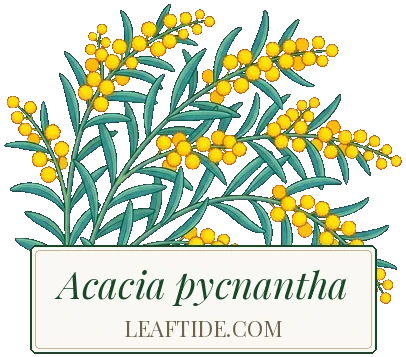
Golden Wattle is Australia's national floral emblem, a fast-growing evergreen shrub or small tree smothered in fragrant golden flower balls from late winter to spring. Plant in full sun and well-drained soil. Water deeply during the first year; once established it is highly drought tolerant. Use native low-phosphorus fertiliser only: high phosphorus is harmful. Prune lightly after flowering to maintain a bushy shape. Short-lived (15-20 years) but incredibly rewarding.
 In your Leaftide garden


- Height
- 6 m (20 ft)
- Spread
- 4 m (13 ft)
- Flowers
- March - April
- Light
- Full sun
- Water
- Low
Yearly Lifecycle
Care Essentials
Apply a native low-phosphorus slow-release fertiliser in early spring and autumn. Avoid high-phosphorus products which are harmful to Australian natives.
Watch For
- Uromycladium rust galls
- Psyllids
- Scale insects
- Phytophthora root rot
Companions
Grevillea, Callistemon, Native grasses, Eremophila
Care Requirements
Light
Full sun
Requires full sun for at least 8 hours daily. Cannot tolerate shade. A sunny open position produces the densest flowering display.
Watering
Deep watering while establishing; drought tolerant once mature
Water deeply twice a week during the first 12 months. Once established, water only during extended dry spells. Overwatering and waterlogged soil cause root rot.
Fertilizing
Native low-phosphorus fertiliser only
Apply a native-formulated low-phosphorus slow-release fertiliser in early spring and autumn. Never use standard garden fertilisers: high phosphorus damages or kills Australian natives.
Pruning
Light prune after flowering; tip-prune in late summer
Prune lightly immediately after flowering to keep a tidy shape and encourage bushy growth. Tip-prune again in late summer. Avoid cutting into old hard wood.
Spacing
3-4 m (10-13 ft) apart as feature plants
Allow 3-4 m (10-13 ft) between plants as a specimen or feature tree. For informal screening, space 1-1.5 m (3.5-5 ft) apart. Very fast growing. Give adequate room from the start.
Growing Tips
Prune lightly, straight after flowering
Trim flowered shoots back by a third as soon as the blossom fades. Do not cut into bare old wood: wattles shoot poorly from it, and a hard prune can leave permanent gaps or kill the plant.
A short-lived tree: plan a successor
Golden wattle grows fast but does not live long. Raise a replacement from seed while the first tree is in its prime, so you are not left with a gap when it declines.
Scald the seed before sowing
The seed coat is hard and waterproof, so seed sits dormant unless it is treated. Pour just-boiled water over the seed, leave it to soak as the water cools, and sow the seeds that have swollen.
Pests & Diseases
Disease Root Rot (Phytophthora)
Symptoms: Foliage yellows and thins, branches die back and the whole tree can collapse, often after wet weather or on heavy, poorly drained soil. Wattles are very sensitive to wet roots.
Treatment: There is no cure once the roots are rotting. If the tree is only starting to decline, stop watering and improve drainage; replace a collapsed tree on a better-drained site rather than in the same hole.
Prevention: Plant on a slope or raised mound in gritty, free-draining soil, and do not water established trees in cool, wet weather.