How to Grow Italian Cypress
Cupressus sempervirens
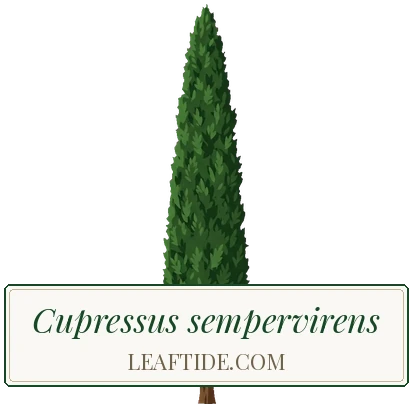
Italian Cypress thrives in full sun with well-drained, even poor or chalky soil. Extremely drought-tolerant once established. Plant in a sheltered spot in cooler climates. Water regularly for the first two years, then only in extreme drought. No regular pruning needed: just remove dead wood or trim lightly to tidy the silhouette. Protect from heavy snow which can splay the narrow crown.
 In your Leaftide garden


Yearly Lifecycle
Care Essentials
Feed young trees with a balanced slow-release fertiliser in spring. Established trees rarely need feeding.
Watch For
- Cypress canker (Seiridium cardinale)
- Cypress aphid
- Root rot in waterlogged soil
Companions
Lavender, Rosemary, Olive, Santolina
Care Requirements
Light
Full sun essential
Requires full sun for best form and health. Will not thrive in shade or partial shade. South or west-facing positions in well-drained soil are ideal.
Watering
Drought-tolerant once established
Water deeply every 2 weeks during the first two growing seasons to establish deep roots. After that, natural rainfall is usually sufficient. Extremely drought-tolerant once established.
Fertilizing
Young trees only, slow-release
Feed young trees with a balanced slow-release fertiliser in spring. Established trees rarely need feeding. Avoid over-feeding which produces soft growth.
Pruning
Light trim only, never old wood
Prune lightly in late spring to maintain the columnar shape. Never cut into old bare wood as cypress does not regenerate from leafless stems. Remove dead branches any time.
Growing Tips
Sun and drainage are everything
Italian Cypress needs full sun and excellent drainage. It thrives in poor, rocky, or chalky soils and suffers in heavy, waterlogged clay. If your soil is heavy, plant on a raised mound or add generous gravel to the planting hole.
Deep watering while establishing
Water deeply but infrequently during the first two growing seasons to establish deep roots. After that, natural rainfall is usually sufficient. In pots, let the compost dry out between waterings.
Protect from snow splay
In areas with heavy snowfall, loosely tie the branches together with soft twine in autumn to prevent the columnar form being splayed open by snow weight.
Never cut into old wood
If the tree grows taller than desired, you can lightly trim the top, but never cut into old bare wood: cypress does not regenerate from leafless stems.
Pests & Diseases
Pest Cypress Aphid
Identification: Greyish-brown aphids 2-4 mm long, so well camouflaged on the stems that they are easy to miss. They feed from spring to late autumn, peaking in early summer. Shoots yellow in summer and are brown and dead by late summer, and black sooty mould on the stems confirms aphids rather than another cause.
- Check the tree regularly from spring and squash colonies before numbers build up.
- Encourage ladybirds, hoverflies, lacewings and earwigs, which feed on the aphids.
- Trim brown shoots back only to green growth: cypress does not regrow from bare wood.
Disease Cypress Canker Seiridium cardinale
Symptoms: Single branches turn yellow and then reddish-brown, scattered through the crown or starting at the top. Sunken patches of dead bark on branches and trunk ooze resin, and as the cankers spread they can girdle and kill the top or the whole tree within a few years.
Treatment: There is no chemical cure. In dry weather, cut out affected branches well below the canker and dispose of them, disinfecting tools between cuts. Remove badly affected trees so they don't infect their neighbours.
Prevention: Plant in well-drained soil, avoid wounding the bark with strimmers, mowers or careless pruning, and water deeply in long droughts so the tree is not stressed.
Disease Phytophthora Root Rot Phytophthora spp.
Symptoms: Parts of the crown turn pale green or yellow, then brown over a few weeks. Under the bark at the base of the trunk the tissue is brown and dead, the roots are brown and rotten, and the problem often spreads to neighbouring trees. It follows wet winters, heavy soil and overwatering.
Treatment: There is no cure for gardeners. Remove dead trees with as much root as possible, and don't replant cypress or other susceptible plants in the same spot.
Prevention: Plant only in free-draining soil, on a raised mound if your soil is heavy clay, and never keep established trees wet.