How to Grow Buttercup Winter Hazel
Corylopsis pauciflora
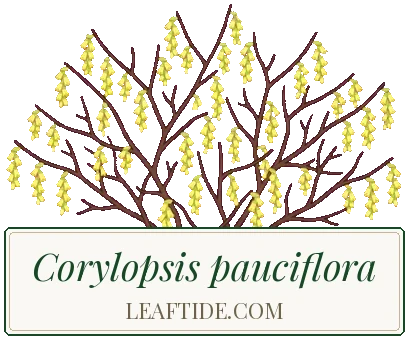
Corylopsis pauciflora is a graceful deciduous shrub prized for its pendant clusters of fragrant pale yellow flowers in late winter, before leaves emerge. Plant in acidic, humus-rich, well-drained soil in partial shade sheltered from cold winds. Minimal pruning needed: just shape lightly after flowering. Foliage turns orange-red in autumn.
 In your Leaftide garden


- Height
- 2 m (6.5 ft)
- Spread
- 2 m (6.5 ft)
- Flowers
- February - June
- Light
- Full sun to part shade
- Water
- Moderate
Yearly Lifecycle
Care Essentials
In spring with an ericaceous or balanced fertiliser after flowering finishes.
Watch For
- Late frost damage to early flowers
- Leaf scorch from wind exposure
- Chlorosis on alkaline soils
Companions
Hellebores, Snowdrops, Rhododendrons, Ferns
Care Requirements
Light
Partial shade; morning sun with afternoon shade
Partial shade is ideal: morning sun with afternoon shade, or dappled light under a high canopy. Full sun is tolerated in cooler climates with adequate moisture. Avoid hot, sun-baked walls.
Watering
Medium moisture; water in dry spells; good drainage essential
Consistent medium moisture. Water regularly during dry spells, especially in the first few years after planting. Good drainage is essential: does not tolerate waterlogging.
Fertilizing
Ericaceous feed in spring after flowering
Feed in spring after flowering with an ericaceous fertiliser or well-rotted compost. Avoid lime-based feeds which raise soil pH.
Pruning
Light shaping after flowering only; never prune in summer/autumn
Minimal pruning needed. If shaping is required, prune immediately after flowering finishes in early spring. Never prune in summer or autumn as flower buds form on the previous year's wood.
Mulching
Annual acidic mulch to maintain soil pH and moisture
Mulch annually with ericaceous compost, pine needles, or bark to maintain soil acidity and conserve moisture. Apply in spring after feeding.
Growing Tips
Protect early flowers
Site under a light tree canopy or against a sheltered wall to protect the early flowers from late frost damage.
Acidic soil is essential
Will not thrive on alkaline or chalky soils. If your soil is neutral, amend with ericaceous compost and mulch with pine needles or bark.
Minimal pruning
Only prune immediately after flowering if shaping is needed. Never prune in summer or autumn: flower buds form on previous year's wood.
Pests & Diseases
Disease Late Frost Damage to Flowers
Symptoms: The pale yellow flowers turn brown and limp or drop after a frost, because they open in late winter when hard frosts are still likely. The shrub itself is not harmed.
Treatment: Nothing needs to be done for the plant; it will flower again next year. Trim off any frosted shoot tips after flowering.
Prevention: Plant under the light cover of taller trees or in a sheltered spot out of early morning sun, which makes frozen flowers thaw too fast. Do not plant in a frost pocket.
Disease Wind Scorch
Symptoms: Leaf edges and tips turn brown and crisp in summer, and the leaves may drop early, especially in cold or drying wind.
Treatment: Water well in dry spells and leave the scorched leaves; the shrub regrows new ones. Prune out any dead twigs after flowering.
Prevention: Plant in a sheltered position, behind a hedge or among other shrubs, away from cold or drying winds.
Disease Lime-induced Chlorosis
Symptoms: Leaves turn yellow between the veins while the veins stay green, and growth is weak. It appears on chalky or alkaline soil.
Treatment: Feed with a chelated iron or sequestered iron product as the label directs, and water with collected rainwater rather than hard tap water.
Prevention: Grow it in acid to neutral, humus-rich soil, or in a large pot of ericaceous compost if your soil is alkaline. Mulch with leaf mould or bark each spring.