How to Grow Argan Tree
Argania spinosa
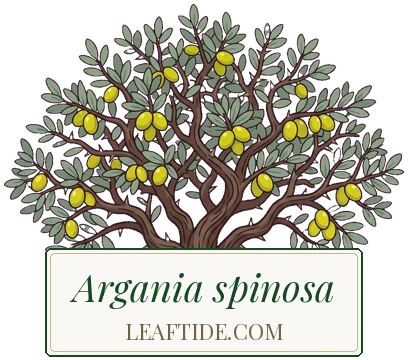
The argan tree is an extraordinarily drought-tolerant, long-lived evergreen native to semi-arid Morocco. Plant in full sun in very well-drained, even poor soil: it thrives where other trees fail. Water sparingly once established; overwatering and waterlogging are its main threats. Protect young trees from frost below -6 °C (21 °F). Almost no pruning is needed. Slow-growing and patient: expect decades before it reaches a mature size, but it will reward you with handsome, thorny, olive-like foliage and small olive-shaped fruit.
 In your Leaftide garden


- Height
- 10 m (33 ft)
- Spread
- 10 m (33 ft)
- Spacing
- 10 m (33 ft)
- Light
- Full sun
- Water
- Low
- Prune
- Minimal
Yearly Lifecycle
Care Essentials
No regular feeding needed. On very poor soils, apply a light balanced feed in spring. Avoid high-nitrogen fertilisers.
Watch For
- Scale insects
- Sooty mould (from scale honeydew)
- Root rot (from waterlogging)
Care Requirements
Light
Full sun, no shade tolerance
Requires maximum sun exposure year-round. Native to open semi-desert; does not tolerate shade and will decline in shaded positions.
Watering
Very low; drought-tolerant once established
One of the most drought-tolerant trees in cultivation. Once established (2-3 years), supplemental irrigation is rarely needed except in extreme prolonged drought. Excellent drainage is essential: waterlogging causes root rot.
Fertilizing
Not needed on most soils
Thrives on poor, sandy, and alkaline soils with no fertiliser. On very impoverished soils, a light balanced feed in spring is acceptable. Avoid high-nitrogen fertilisers that promote soft, disease-prone growth.
Pruning
Minimal; formative pruning in first years only
Remove dead, damaged or crossing branches in late winter. Avoid hard pruning: slow-growing species regenerate poorly from old wood. A light formative prune in the first 3-5 years to build a good framework is all that is required.
Spacing
8-10 m (26-33 ft) between trees
Allow 8-10 m (26-33 ft) spacing for full crown development. In traditional Moroccan agroforestry, trees are spaced 8-15 m (26-49 ft) apart to allow intercropping underneath.
Growing Tips
Choose its final spot early
The argan tree sends down a very deep taproot, so it resents being moved. Grow young plants in a deep pot and plant them out small, once, where they are to stay.
Wear gloves and eye protection
The branches carry sharp spines. Wear thick gloves and eye protection when pruning, and keep it away from paths and play areas.
Pests & Diseases
Disease Root rot
Symptoms: Leaves yellow and drop, new growth stalls and the tree declines, usually in heavy or poorly draining soil, or after too much watering.
Treatment: Reduce watering at once and let the soil dry out. A tree with badly rotted roots is rarely saved, so replant in freshly drained ground if it does not recover.
Prevention: Plant in very free-draining soil, on a mound or slope where needed, and water sparingly once the tree is established.
Spacing & Planting
| Plant spacing | 10 m (33 ft) |
| Row spacing | 10 m (33 ft) |
| Mature height | 10 m (33 ft) |
| Mature spread | 10 m (33 ft) |