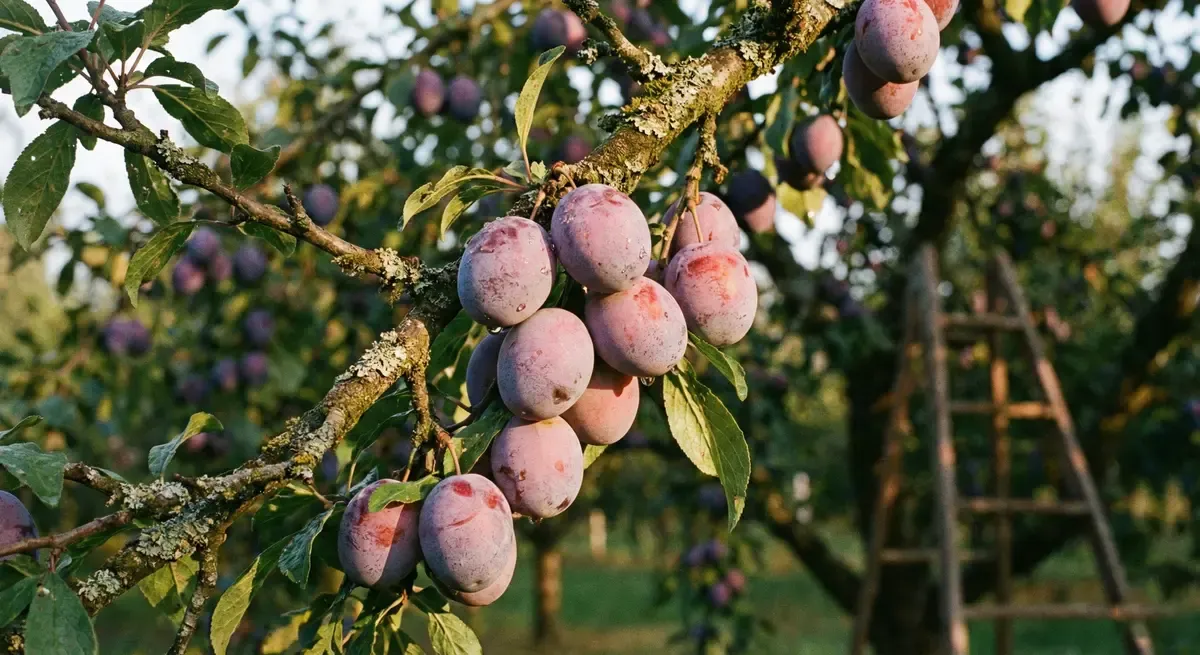
Plum trees break the winter pruning rule that applies to most fruit trees. Unlike apples or pears, plums must be pruned in summer to avoid silver leaf disease — a fungal infection that enters through pruning wounds and can kill a tree within a few years. The fungus releases spores during cold, wet months when most fruit trees are traditionally pruned. Understanding this timing difference is essential for keeping plum trees healthy.
Silver leaf disease is the primary reason plums need summer pruning, but it’s not the only one. Plums also face bacterial canker, another infection that enters through wounds and thrives in cold, damp conditions. Both diseases make winter pruning a serious risk. Summer pruning, by contrast, happens when spore levels are low and wounds heal quickly in warm, dry weather.
Summer Pruning Only
Prune established plum trees in summer, typically late June through August. In USDA zones 5-9, this means pruning after harvest when temperatures are warm and wounds heal rapidly. Winter pruning exposes trees to silver leaf disease, whose spores are active from autumn through spring. This timing is not negotiable — it’s essential for tree health.
Why plums need summer pruning
Silver leaf disease is caused by the fungus Chondrostereum purpureum. It enters through wounds — pruning cuts, broken branches, frost cracks — and spreads through the tree’s vascular system. The first symptom is a silvery sheen on leaves, caused by air pockets forming between leaf layers. Eventually, the fungus produces bracket-shaped fruiting bodies on dead wood, and by that point, the tree is usually beyond saving.
The fungus releases spores from September through May, with peak activity during wet autumn and winter months. Pruning during this period invites infection. Summer pruning happens when spore levels are low and wounds heal quickly in warm, dry conditions.
Plums also share another disease risk with cherries: bacterial canker. This bacterial infection causes sunken patches on bark, gumming, and dieback. Like silver leaf, it enters through wounds and is most active in cold, wet weather. Cherry trees face the same challenge, which is why both stone fruits follow the summer pruning rule.
The ideal timing window
For established plum trees, prune between late June and August. The best time is after harvest, when you can see the tree’s structure clearly without fruit obscuring branches. In USDA zones 5-7, where most plums thrive, this typically means July through early August for European varieties like Stanley and Italian Prune, and late June through July for Japanese varieties like Santa Rosa and Methley.
Japanese plums (Prunus salicina) ripen earlier than European plums (Prunus domestica) and are generally more vigorous. Santa Rosa, one of the most popular Japanese varieties in the US, ripens in late June to early July in zone 7, making it ready for pruning by mid-July. Methley, another Japanese variety known for its cold hardiness, follows a similar schedule. European plums like Stanley ripen later — typically August in zones 5-6 — so pruning happens in late August or early September.
In the UK, where Victoria plums dominate, the timing is similar: July to August after harvest. UK gardeners should follow the same principles, adjusting for local harvest dates.
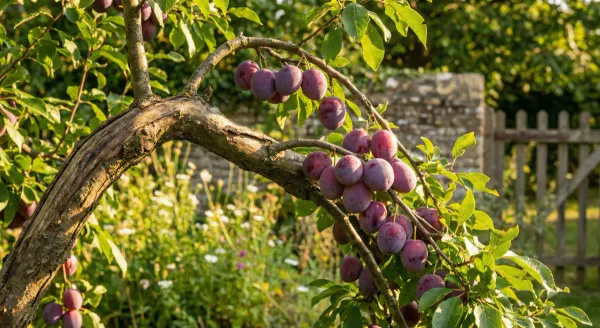
If you’re pruning before harvest, be conservative. Remove only dead, diseased, or obviously problematic branches. Save detailed work for after fruit is picked.
The key is warm, dry weather. Wounds heal fastest when the tree is actively growing and conditions favour rapid callus formation. Avoid pruning during prolonged wet spells, even in summer, as moisture increases infection risk.
Tools You'll Need
Sharp bypass secateurs are essential — plum wood can be brittle, and clean cuts heal faster than ragged ones. For branches thicker than your thumb, use a pruning saw rather than forcing secateurs. Keep a sterilising solution handy (diluted bleach or methylated spirits) and wipe blades between trees. Silver leaf spreads on contaminated tools, so this isn’t optional. If you’re dealing with suckers growing from roots away from the trunk, a sharp spade makes the job easier.

Plums are more forgiving than apples
If you’re used to pruning apples or pears, plums will feel refreshingly straightforward. Apples need precise spur pruning to maintain fruiting wood and control vigour. Plums fruit on both old wood and young shoots, so they don’t require the same level of detailed shaping.
Once the basic framework is established — an open-centred bush or a central leader, depending on your training system — annual maintenance is minimal. Remove dead, diseased, and crossing branches. Thin crowded areas to improve light penetration and airflow. That’s largely it.
Plums are also more tolerant of imperfect cuts. With apples, cutting to the wrong bud or leaving a stub can affect fruiting for years. Plums are less fussy. As long as you’re cutting cleanly and not leaving torn bark, the tree will cope.
This doesn’t mean you can be careless, but it does mean you can relax. Plums reward a light touch. Over-pruning stimulates excessive vegetative growth at the expense of fruit, so err on the side of doing less rather than more.
Young plum trees: the spring exception
Newly planted plum trees need formative pruning to establish their structure. This is the one time when spring pruning is acceptable — specifically, March to April in zones 5-7, when sap is rising and wounds heal quickly.
For a bush tree, the goal is an open-centred framework with three or four main branches radiating from a short trunk. In the first spring after planting, cut the main stem back to about 90cm (3 feet) above ground level, just above a bud. This encourages the tree to produce strong lateral branches.
In the second spring, select three or four well-spaced laterals to form the main framework and shorten them by about half. Remove any branches that are crossing, growing inwards, or competing with the leaders.
After the third year, switch to summer pruning. The framework is established, and the focus shifts to maintenance and disease prevention.
For fan-trained or espalier plums, formative pruning is more involved and continues for several years. The principle remains the same: do structural work in early spring when the tree is just waking up, then switch to summer maintenance once the shape is set.
Popular varieties and their needs
Santa Rosa is one of the most widely planted Japanese plums in the US. It’s vigorous, self-fertile, and produces heavy crops of large, tart-sweet fruit. The vigour means it can tolerate slightly more pruning than European varieties, but resist over-pruning. Focus on thinning crowded areas and removing weak or damaged wood. Prune in July after harvest.
Methley is another Japanese variety, valued for its cold hardiness (zone 5) and early ripening. It’s less vigorous than Santa Rosa and needs a lighter touch. Prune conservatively in late June or early July.
Stanley is the standard European plum for zones 5-7. It’s less vigorous than Japanese varieties and needs minimal pruning once established. Prune in late August after harvest. Stanley is prone to suckering on vigorous rootstocks, so check regularly for shoots emerging below the graft union.
Victoria is the most widely grown plum in Britain and performs well in the Pacific Northwest. It’s self-fertile, reliable, and produces heavy crops of sweet, dual-purpose fruit. But it’s also vigorous, prone to biennial bearing, and susceptible to branch breakage under fruit weight. Prune Victoria plums in July or August after harvest. Fruit thinning is especially important — in June, when fruitlets are about thumbnail size, thin them to one fruit every 5-8cm (2-3 inches). This prevents branch breakage, improves fruit size, and reduces biennial bearing.
Victoria is notorious for producing suckers from the rootstock. These vigorous shoots emerge from below the graft union and, if left unchecked, will drain energy from the fruiting tree. Deal with them as soon as they appear.
European vs Japanese plums
European plums (Prunus domestica) and Japanese plums (Prunus salicina) have different growth habits and pruning needs. European varieties like Stanley, Italian Prune, and Damson are generally less vigorous, more cold-hardy, and fruit reliably on old wood. They need minimal pruning once established.
Japanese varieties like Santa Rosa, Methley, and Shiro are more vigorous, ripen earlier, and produce larger fruit. They’re better suited to warmer zones (6-9) and need slightly more pruning to manage vigour and maintain an open canopy. Japanese plums are also more prone to suckering.
Both types follow the same summer pruning schedule, but Japanese varieties can tolerate slightly more aggressive pruning due to their vigour.
Damsons and gages
Damsons and gages follow the same summer pruning schedule as plums. Both are stone fruits in the Prunus genus and share the same disease vulnerabilities.
Damsons are generally less vigorous than plums and need minimal pruning once established. They fruit reliably on old wood, so the main task is removing dead or diseased branches and keeping the centre open for light and air.
Gages, particularly greengage varieties, are more delicate. They’re slower-growing and less tolerant of heavy pruning. A light touch is essential. Remove only what’s necessary and avoid cutting into old wood unless you’re dealing with disease.
Both damsons and gages are less prone to suckering than plums, but it can still happen, especially on vigorous rootstocks like St Julien A.
The sucker problem
Plums on rootstocks often produce suckers — vigorous shoots that emerge from below the graft union. These are rootstock growth, not the fruiting variety, and they’ll drain energy from the tree if left unchecked.
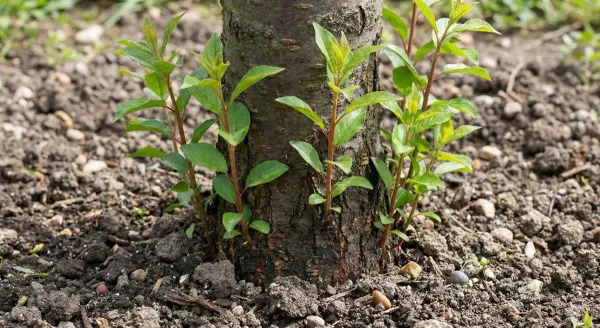
The best way to deal with suckers is to pull them off rather than cut them. Grasp the sucker at its base and pull sharply downwards. This removes the dormant buds at the base of the shoot. Cutting, by contrast, leaves those buds intact, and they’ll produce more suckers.
If the sucker is too thick to pull, cut it as close to the base as possible and monitor for regrowth. You may need to repeat the process several times before the tree stops producing them.
Suckers can appear at any time of year, so check regularly. They’re most common on vigorous rootstocks like St Julien A and Brompton, less so on semi-dwarfing rootstocks like Pixy.
Month-by-month pruning calendar
| Month | What to Do |
|---|---|
| January-May | No pruning on established trees. Silver leaf spores are active. Formative pruning of young trees (years 1-3) can be done in March-April. |
| June | Earliest pruning window in warmer zones. Thin fruit on heavy croppers like Victoria. |
| July | Main pruning window. Prune after harvest on a dry day. Remove suckers. |
| August | Continue pruning. Last chance before autumn. Japanese varieties may be done by now. |
| September | Stop pruning. Silver leaf spore season begins. |
| October-December | No pruning. High disease risk. Only remove broken branches if essential. |
Common mistakes
The biggest mistake is winter pruning. It’s so ingrained in fruit tree culture that many gardeners prune plums in January or February without realising the risk. If you’ve inherited a plum tree and don’t know its pruning history, assume it needs summer pruning and start from there.
Ignoring suckers is another common error. A single sucker left unchecked can grow into a thicket within a couple of years, sapping the tree’s energy and making the base impenetrable.
Over-pruning is less common with plums than apples, but it still happens. Plums respond to heavy pruning by producing excessive vegetative growth — long, whippy shoots that don’t fruit well. If you’re removing more than a quarter of the tree’s canopy in a single year, you’re probably doing too much.
Not thinning fruit is a mistake specific to heavy-cropping varieties like Victoria and Santa Rosa. A tree laden with fruit looks impressive, but the weight can snap branches and exhaust the tree, leading to a poor crop the following year.
Finally, not sterilising tools between cuts when dealing with diseased wood. Silver leaf and bacterial canker spread easily on contaminated secateurs. Wipe blades with a disinfectant solution or methylated spirits between cuts if you’re removing infected branches.
After you prune
Don’t apply wound sealant to pruning cuts. Summer wounds heal quickly in warm, dry weather, and modern research shows that sealants can actually trap moisture and encourage rot rather than prevent it.
Clear all pruned wood away from the base of the tree. Silver leaf spores can develop on dead plum wood left on the ground, and they’ll reinfect the tree if conditions are right. Burn it, chip it, or bin it — just don’t leave it lying around.
Check for suckers regularly through the rest of summer. Pruning can stimulate suckering, especially on vigorous rootstocks like St Julien A. Pull them off as soon as they appear rather than cutting them, which only encourages more growth.
If you thinned fruit on heavy croppers like Victoria, monitor the remaining fruit for signs of brown rot as it ripens. Good airflow from pruning helps reduce disease pressure, but keep an eye out anyway. Brown rot spreads quickly in warm, humid conditions, and one infected fruit can ruin a whole branch.
What to record
Keeping a pruning log helps you track what you’ve done and how the tree responds. For plums, this is especially useful for monitoring silver leaf symptoms and identifying patterns in suckering or biennial bearing.
Record the date, what you removed, and any signs of disease. Note whether you thinned fruit and how the crop turned out. Over time, you’ll build a picture of what works for your tree and your conditions.
If you’re managing multiple permanent plants, a structured log becomes essential. You can read more about what to track in our guide to fruit tree pruning logs.
Never forget when you pruned
Free for up to 30 plants. No card needed.
Sources
This article draws on guidance from the Royal Horticultural Society, particularly their detailed advice on plum pruning and training, as well as extension resources from Penn State Extension and University of California Agriculture and Natural Resources. These institutions provide evidence-based information for fruit growers at all levels.
Cherry trees share the same silver leaf risk and summer pruning schedule — see our guide on when to prune cherry trees. For winter-pruned fruit trees, see when to prune apple trees and when to prune pear trees. For spring-pruned stone fruit, see when to prune peach trees.