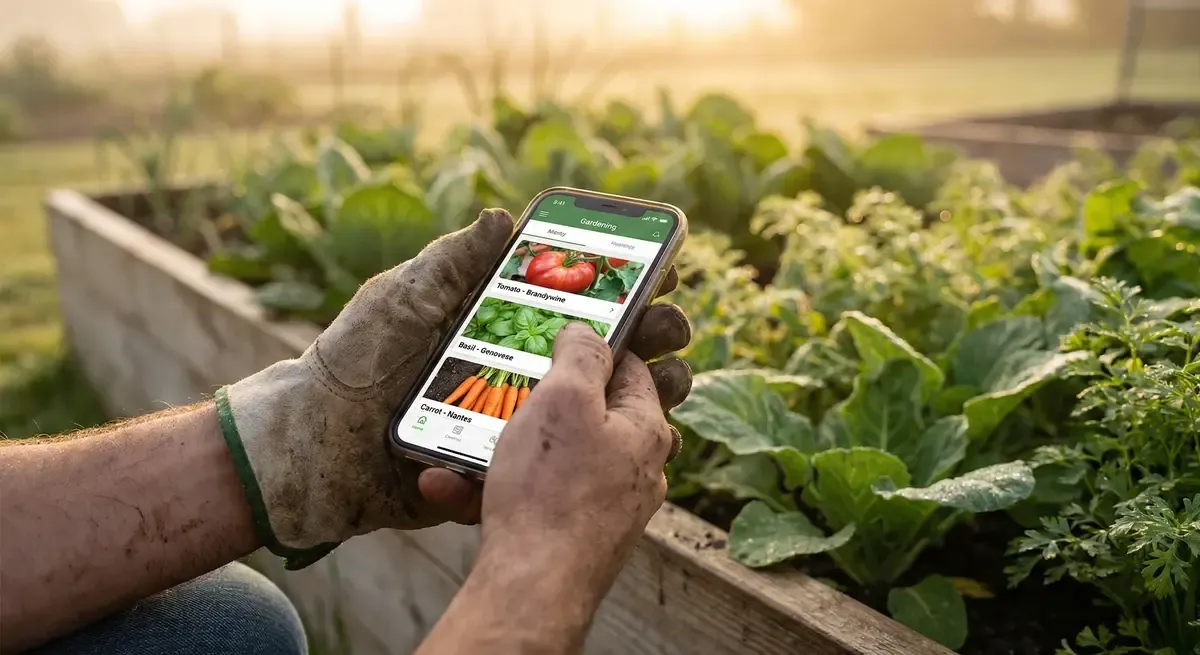
Every autumn I would flip through my garden journal looking for answers. When did I plant the garlic last year? Which tomato variety actually ripened before the blight hit? The pages were full of notes, but none of them helped. I had been tracking the wrong things.
For years I dutifully recorded the weather each morning. Light rain. Sunny and warm. Cloudy with a chance of showers. Pages of observations that told me nothing useful when I needed to make decisions. Meanwhile, the information that would have actually helped, the dates and varieties and outcomes, went unrecorded because I assumed I would remember.
I did not remember.
The problem was not that I lacked discipline. The problem was that nobody had told me what actually matters in a garden journal. Most gardening advice is frustratingly vague: “write down the weather,” “note what you planted.” But which weather? Which details about what you planted? Without a clear system, even the most dedicated journaling becomes an abandoned notebook by June.
Here is what I have learned about what to track, what to skip, and why the difference matters.
Why most garden journals fail
There are two ways to fail at garden journaling. The first is trying to record everything. You start the season with grand ambitions, writing down every observation, every fluctuation in temperature. By May the effort is exhausting and the habit drops. The journal gathers dust until next spring when you try again with the same overwhelming approach.
The second failure mode is recording too little. A few scattered notes here and there, no dates, no context. “Planted tomatoes” in March tells you nothing in September when you want to know which variety performed well or when you actually got your first ripe fruit.
Both failures share the same root cause: no system for deciding what matters. Without clear criteria, you either record everything (unsustainable) or whatever happens to be on your mind (useless later).
The solution is ruthless focus. Track only the things that will help you make better decisions next year. Everything else is noise.
The seven things worth tracking
After years of messy notes, I have narrowed my tracking to seven categories. Each one has earned its place by proving useful in practice, not just in theory.
1. Planting dates and sources
This seems obvious, but the key is recording both pieces of information together. “Planted Sungold tomatoes on 15 April” is useful. “Planted Sungold tomatoes from Chiltern Seeds on 15 April” is better.
Last year I grew a climbing French bean that produced spectacularly, but I had no idea where I bought the seeds. The packet was long gone. I spent an hour searching seed catalogues trying to find the variety again. If I had written down the source, that hour would have been seconds.
Tracking the source also helps you evaluate suppliers. After three years I noticed that tomato seedlings from one nursery consistently struggled while those from another thrived. Now I know where to shop.
2. Variety names, not just types
“Planted courgettes” is almost worthless information. “Planted Costata Romanesco courgettes” is data you can use.
I once grew three different tomato varieties in the same bed. By August, one was covered in blight, one was struggling to ripen, and one was producing beautiful fruit I was eating straight off the vine. But I had only noted “tomatoes” in my journal. I had no idea which plant was which variety. All that useful performance data, lost.
Now I label my plants when they go in the ground and record the variety name in my journal. When something performs brilliantly or fails miserably, I know exactly what it was.
3. Weather events, not weather
Recording “sunny and 22 degrees” every day is pointless. You can look up historical weather data if you need it. But extreme weather events, the ones that actually affect your garden, are worth documenting because they explain outcomes.
The things worth noting: late frosts (with dates), extended heatwaves, drought periods, unusual cold snaps, heavy storms that damaged plants. These are the events that explain why something failed or why yields were lower than expected.
In 2023 we had a frost on 12 May, well after the “last frost” date for my area. I lost all my courgette seedlings. Because I recorded the date, I now know to wait longer before planting out tender crops, whatever the calendar says.
4. Pest and disease observations
The first year I noticed blackfly on my broad beans, I assumed it was bad luck. The second year, same thing. The third year, same timing, same plants, same location. It was not bad luck. It was a pattern, and I only spotted it because I had written down the observations with dates.
Recording pest and disease sightings with dates and affected plants helps you spot patterns: which crops are vulnerable, which parts of the garden have recurring problems, which times of year need extra vigilance. Over several seasons, you build a map of your garden’s weak points.
I now know that my runner beans get red spider mite in dry Augusts, that the brassicas in the south bed suffer more from cabbage white caterpillars than those in the shade, and that the fungal problem on my apples always starts in the same corner where airflow is poor.
5. Harvest dates and yields
Knowing when you actually harvested helps you plan for next year. If your “early” variety of potato did not come out until late July, perhaps it is not as early as advertised for your climate. If your winter squash was ready by September, you have more flexibility than you thought.
Tracking yields, even roughly, helps you understand what is worth growing. I used to think my beetroot crop was successful because I harvested something. But when I started weighing the harvest, I realised I was getting about 2kg from a 3 metre row. The same space devoted to chard gave me continuous harvests for six months. Now I know where to allocate my limited growing space.
You do not need precise measurements. “Two colanders of French beans” or “enough courgettes for three weeks of meals” is sufficient. The goal is comparison, not scientific accuracy.
6. What failed and why
This is the most valuable data in any garden journal, and the data most gardeners resist recording. Nobody wants to document their failures. But failures teach more than successes.
When something dies or underperforms, I write down what I observed and my best guess at the cause. “Carrots failed, germination patchy, probably sowed too deep” or “Runner beans cropped poorly, watering inconsistent in July” or “Sweetcorn caught by frost on 3 October, should have harvested earlier.”
These notes prevent me from making the same mistake twice. More importantly, they give me realistic expectations. I know that parsnips rarely germinate well in my garden, that aubergines need more heat than I can provide outdoors, and that winter lettuce is a struggle unless I use cloches.
7. Photos
A picture of that pest damage tells you more than any written description when you see the same marks next year. A photo of your plot in June reminds you how much space that courgette actually took up. Before and after shots of pruning help you remember what you did.
The key is attaching photos to specific plants or events, not just dumping them in a camera roll where you will never find them again. A photo needs context: what, when, why.
What not to bother tracking
All of that is only half the problem. What you leave out matters too.
Daily weather
You do not need to record that it was cloudy on Tuesday. Historical weather data is freely available online. If you want to know the temperature on 15 June 2024, you can look it up. Recording daily weather manually is effort for no benefit.
Track the exceptions: the unusual events that affected your garden. Skip the routine.
Every task you complete
“Watered the greenhouse” is not useful information. Neither is “weeded the beds” or “mowed the lawn.” These are maintenance tasks, not decisions with consequences.
Focus on recording things that will help future decisions. When you planted, what you observed, what happened. Not every time you turned on a hose.
Aspirational plans
I used to fill my journal with plans: “must try dahlias next year,” “want to experiment with winter salads,” “should build another raised bed.” These plans cluttered my records and rarely led to action.
Keep a separate place for ideas and wishes. Your journal should document what actually happened, not what you hoped might happen.
Paper versus digital: an honest comparison
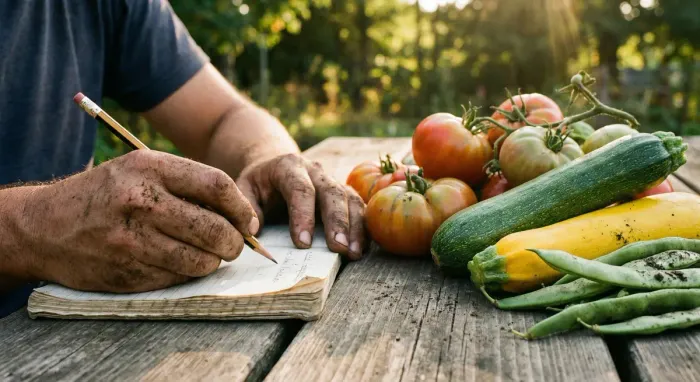
There is romance in a paper garden journal. The worn cover, the handwritten notes, the pressed flower from that exceptional summer. I understand the appeal. I used paper for years.
But paper has limitations that became harder to ignore.
Paper is not searchable. When I wanted to know when I planted garlic over the past five years, I had to flip through five journals, scanning for the word “garlic.” In a digital journal, that is a five second search.
Paper gets lost. A water spill, a move to a new house, a notebook left at the allotment. Years of records, gone. Digital journals can be backed up.
Paper does not handle photos well. You can tape in pictures, but they fall out. You can reference a separate photo album, but you will not.
Paper does not remind you. It sits there, passive, waiting for you to remember to write in it. Digital tools can nudge you when you have not recorded anything in a week.
I still keep a small paper notebook for jotting quick notes when I am in the garden without my phone. But those notes get transferred to a digital system the same evening. The paper is temporary; the digital record is permanent.
The verdict: digital wins for long term usefulness. Paper works for the romantic at heart, but you sacrifice functionality.
How to make journaling stick
Whichever format you choose, the challenge is consistency. The most sophisticated tracking system means nothing if you abandon it by midsummer. Here is what has worked for me.
Weekly, not daily
Trying to write something every day is unsustainable. You miss one day, feel guilty, miss another, and the habit unravels. Weekly check ins are sustainable. Every Sunday I spend five minutes recording what I planted, harvested, or observed during the week.
Five minutes is enough
You are not writing a novel. A few bullet points, a photo, a date. If your journaling takes longer than five minutes, you are tracking too much.
The winter review is the payoff
The real value of a garden journal emerges in winter. When you are planning next year’s garden, you have months of decisions to review. What worked? What failed? What will you do differently?
This is when all those quick notes become genuinely useful. And experiencing that usefulness reinforces the habit for the coming season. You see the point of the effort, and that makes the effort easier.
How Leaftide makes this easier
I built Leaftide partly to solve my own journaling problems. Instead of scribbling notes that I might or might not find later, every plant gets a profile with its variety, source, and planting date attached. Instead of trying to remember what I did, every task is timestamped automatically.
When I want to know when I last pruned the apple tree, I open its record and see the history. When I want to compare how different tomato varieties performed, the data is already organised by plant. When I notice something odd, I can attach a photo with one tap rather than hunting for tape and scissors.
The permanent plants, the fruit trees and shrubs and perennials, build a record year after year. I can see when my quince flowered for the past three seasons and spot patterns I would never notice otherwise.
It is not about being obsessive. It is about having the information when you need it, without the friction of paper or the mess of scattered notes.
The best garden journal is the one you actually use.
Leaftide logs every planting date, tracks what you did and when, and lets you attach photos to any plant or task. The journal practically keeps itself.
Free for up to 30 plants. No card needed.
What this means in practice
A garden journal is only useful if it helps you make better decisions. Track the things that matter: varieties, dates, events, outcomes. Skip the things that do not. Review your notes in winter when you are planning the next season.
The goal is not to create paperwork. The goal is to remember what you learned.
Sources and further reading
- RHS: Keeping a Garden Diary - Royal Horticultural Society guidance on what to record
- Allotment Garden: The Benefits of Keeping a Garden Journal - Community perspective on journaling benefits