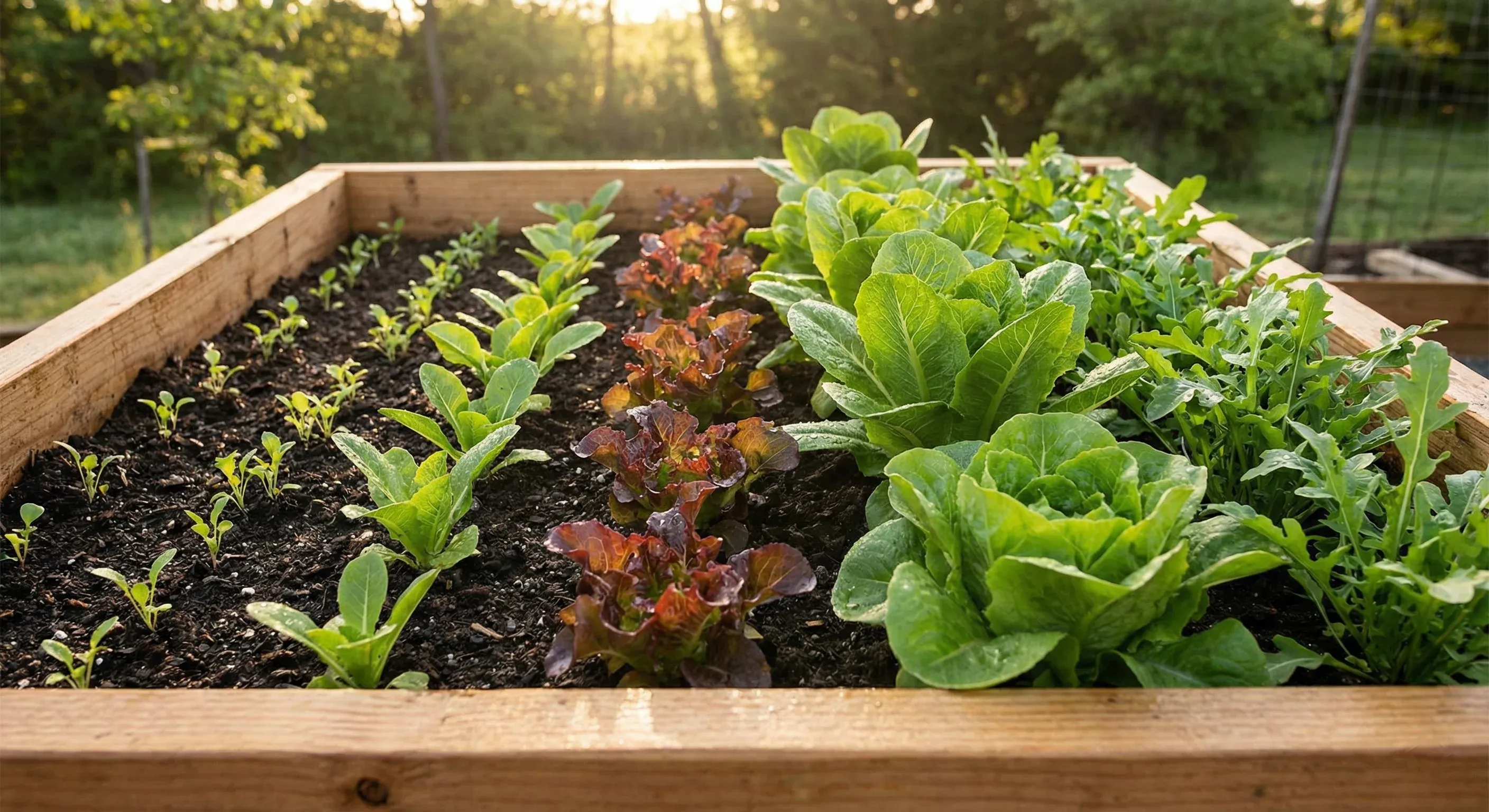
The first year I grew lettuce properly, I sowed an entire packet in one go. Three weeks later I had forty heads of lettuce ready at the same time. We ate salad for every meal. We gave bags of it to the neighbours. Half of it bolted before we could get through it. The following week, there was nothing left to pick.
That is the problem succession planting solves. Instead of sowing everything at once and dealing with a glut followed by an empty bed, you stagger your sowings so something is always coming ready. It sounds obvious when you say it out loud, but it took me a wasted season to actually do it.
What succession planting actually means
Succession planting is just sowing the same crop at regular intervals instead of all at once. You put in a short row of lettuce this week, another in two weeks, another two weeks after that. Each batch matures at a different time, so you get a steady supply rather than a single overwhelming harvest.
The idea applies to any crop that matures relatively quickly. Lettuce, radishes, spinach, spring onions, beetroot, French beans. Anything you want to eat fresh over a long period rather than all in one week.
It does not apply to everything. Tomatoes, courgettes, and peppers produce continuously once they start fruiting, so one sowing is enough. The same goes for most perennial crops. Succession planting is specifically for crops that have a defined harvest window and then they are done.
Continuous vs Single Harvest
Some crops produce over weeks or months from a single planting (tomatoes, courgettes, runner beans). Others give you one harvest and then the plant is finished (lettuce heads, radishes, carrots). Succession planting matters most for the second group. If you are not sure which category a crop falls into, check whether it is listed as “continuous harvest” or “single harvest” in your planning tool.
A basic succession planting schedule
You do not need a complicated spreadsheet to start. Here is a straightforward schedule for the crops that benefit most from staggered sowing. These intervals assume a UK or northern US climate with a growing season from roughly April to September.
| Crop | Sow every | First sowing | Last sowing | Notes |
|---|---|---|---|---|
| Lettuce (heading) | 2 weeks | Early April | Late July | Bolts in heat, so skip midsummer sowings or use bolt-resistant varieties |
| Lettuce (cut-and-come-again) | 3 weeks | March (under cover) | August | More forgiving than heading types |
| Radishes | 2 weeks | March | September | Fast crop, 4-6 weeks to harvest |
| Spinach | 3 weeks | March | September | Bolts in summer heat, better in spring and autumn |
| Spring onions | 3 weeks | March | July | Slow to bolt, very reliable for succession |
| Beetroot | 3 weeks | April | July | Later sowings may not size up before frost |
| French beans (dwarf) | 3 weeks | May | July | Need warm soil, do not rush the first sowing |
| Peas | 3-4 weeks | March | June | Heat stops them, so front-load your sowings |
| Carrots | 4 weeks | April | June | Slow to mature, 2-3 successions is usually enough |
| Coriander | 2 weeks | April | September | Bolts fast, frequent small sowings are the only way |
The intervals are guidelines, not rules. Your climate shifts everything. A gardener in Cornwall can start earlier and finish later than someone in the Scottish Highlands. The point is the pattern: regular, small sowings instead of one big one.
See exactly how many successions fit your season.
Free for up to 30 plants. No card needed.
How to figure out your own timing
The schedule above is a starting point, but the real question is always “when exactly should I sow this, here, in my garden?” Generic charts give you a month. What you actually need is a date.
This is where your local frost dates matter. Your last spring frost tells you when it is safe to start warm-season crops outdoors. Your first autumn frost tells you when to stop. Everything in between is your succession planting window.
For each crop, work backwards from the first frost date. If French beans need 60 days to mature and your first frost is around mid-October, your last sowing needs to go in by mid-August at the latest. If radishes need 30 days, you can keep sowing into September.
The Crop Timeline Calculator does this arithmetic for you. Enter your location and a crop, and it shows you the sowing window based on your local climate data. You can see exactly when the safe window opens in spring and when it closes in autumn. That makes it much easier to plan how many successions you can fit in.
I built the sowing date system in Leaftide partly because I kept getting this wrong. I would sow beans too late and they would get caught by frost, or I would stop sowing lettuce too early and have bare beds in September when there was still plenty of growing time left. Having actual dates based on my location changed how I planned the season.
The bed turnover problem
Here is the part most succession planting guides skip: where do the later sowings actually go?
If your first batch of lettuce is still in the ground when the second batch needs planting, you need somewhere to put it. This is the real challenge of succession planting. It is not the sowing schedule that trips people up, it is the space.
There are a few ways to handle this.
Dedicated succession rows. Reserve a section of bed specifically for repeat sowings. Do not fill it all at once. Sow a short row, leave the rest empty, and fill it in stages. It looks bare at first, but by midsummer every section is at a different stage and the bed is fully productive. Raised bed layouts work particularly well for this because the boundaries are clear and you can plan each section in advance.
Module sowing. Start your next succession in modules or small pots while the previous batch is still in the ground. By the time you clear the finished crop, the new seedlings are ready to transplant. This is how I handle lettuce now. I always have a tray of seedlings coming along, ready to drop into any gap that opens up. The seed starting indoors guide covers the timing for getting module-sown seedlings to the right stage.
Interplanting. Tuck fast crops between slow ones. Radishes between cabbages. Lettuce between sweetcorn. The fast crop is harvested before the slow one needs the space. This is not strictly succession planting, but it solves the same problem: keeping the bed productive.
Containers. If bed space is tight, grow your succession crops in pots. Lettuce, radishes, spring onions, and herbs all do well in containers. You can start a new pot every couple of weeks without worrying about bed space at all.
Module Sowing Saves Weeks
Starting your next succession in modules while the current crop is still growing means no gap between harvests. A lettuce seedling transplanted at 3-4 weeks old will be ready to pick weeks sooner than one direct sown into the same gap. Once I started doing this, the gluts and bare patches mostly disappeared.
Crops that do not need succession planting
Not everything benefits from staggered sowing. Some crops produce continuously from a single planting, so one sowing is all you need.
Tomatoes, peppers, chillies, aubergines. These fruit over weeks or months. One planting, harvested repeatedly.
Courgettes and squash. A single courgette plant will produce more than most families can eat. Two plants sown at the same time will bury you.
Runner beans and climbing French beans. They keep producing as long as you keep picking. No need to sow again.
Cucumbers. Same principle. One or two plants, picked regularly, will produce all season.
Herbs (perennial). Rosemary, thyme, sage, chives. Plant once, harvest for years.
The exception is basil and coriander. Both bolt quickly, especially in warm weather. Treat them like succession crops: sow a small pot every two to three weeks and you will always have fresh leaves. One big sowing of coriander is a recipe for disappointment.
Planning successions with a timeline
The hardest part of succession planting is keeping track of it all. When did I sow the last batch? When is the next one due? Is there still time for another round before autumn?
I used to keep a paper list, but I would forget to check it. Then I tried calendar reminders, but they did not account for weather or how the season was actually progressing.
What works better is seeing the whole season laid out as a timeline. When you can see that your first lettuce sowing goes in on April 5th, the second on April 19th, the third on May 3rd, and the last safe sowing is July 26th, you know exactly how many rounds you can fit in and when each one needs to happen.
Leaftide’s timeline shows this for each crop based on your climate. It calculates the sowing window and shows when each stage is predicted to happen, so you can see at a glance when the season is closing. If you adjust your setup, say you add a cloche or cold frame, the dates shift to reflect the extended season. That kind of feedback is what I was missing when I was working from generic charts.
The Crop Timeline Calculator gives you a free version of this. Pick a crop, enter your location, and you can see the full timeline from sowing to harvest. It will not plan your successions automatically, but it shows you the window you have to work with, which is the information you need to space out your sowings.
Common succession planting mistakes
I have made all of these at least once.
Sowing too much at each interval. The whole point is small, regular sowings. If you sow a full row every two weeks, you will still end up with gluts, just more of them. A short row or a single module tray per succession is usually enough for a household.
Forgetting to actually sow. Life gets busy. You miss a sowing window, then another, and suddenly there is a six-week gap in your harvest. Setting reminders helps. Having seedlings in modules helps more, because you can see them sitting there waiting to be planted.
Not adjusting for summer heat. Lettuce and spinach bolt in hot weather. Peas stop setting pods. If you keep sowing these crops through July and August without switching to heat-tolerant varieties, you will waste seed and bed space. Either skip the midsummer sowings or choose varieties bred for heat.
Ignoring the autumn cutoff. Every succession sowing needs enough time to mature before frost. It is tempting to squeeze in one more round, but a half-grown lettuce killed by frost is worse than an empty bed. Count backwards from your first frost date and be honest about the numbers.
Treating all crops the same. Radishes need sowing every two weeks. Carrots need sowing every four. Beans need three rounds at most. Match the interval to the crop, not to a single calendar rhythm.
A simpler way to think about it
If the schedule and the intervals feel overwhelming, start with just one crop. Lettuce is the easiest. Sow a short row or a small tray of modules. Two weeks later, sow another. Keep going until midsummer. That is it. You will have fresh lettuce for months instead of weeks, and you will understand the rhythm without needing a complicated plan.
Once lettuce clicks, add radishes. Then spring onions. Then beans. Build the habit gradually. Succession planting is a pattern you develop over a season or two, not something you set up in a single afternoon.
The goal is not perfection. Some gaps will happen. Some sowings will fail. The point is that even a rough succession schedule produces a noticeably better harvest than sowing everything on one weekend in April and hoping for the best. Tracking what you actually harvest makes the gaps visible, so you can adjust your succession timing next year.
See your sowing windows, not just guess them.
Free for up to 30 plants. No card needed.
Work out your sowing windows with the Crop Timeline Calculator. Find your local frost dates with the Frost Date Finder. And if you want to understand how your setup affects timing, read about climate-based sowing dates.