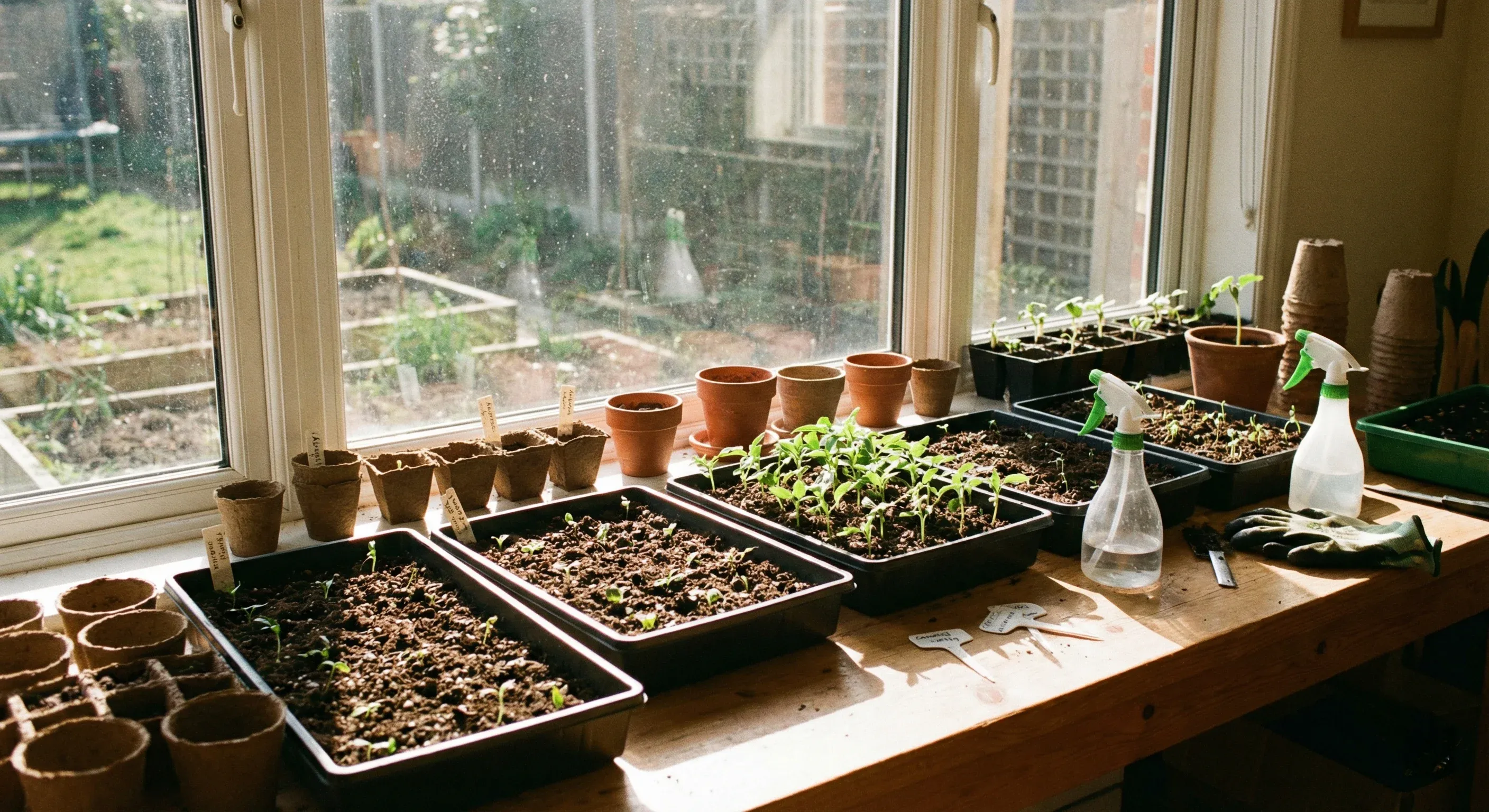
I used to start everything at the same time. First week of March, a dozen seed trays on the kitchen windowsill, tomatoes next to lettuce next to peppers. It felt productive. By April, half of them were leggy, the peppers had barely germinated, and the courgettes were climbing out of their pots with nowhere to go.
The problem was not enthusiasm. It was timing. Different crops need different lead times indoors, and getting that wrong creates more work than it saves.
Why indoor seed starting matters
Starting seeds indoors gives you a head start on the growing season. Instead of waiting until the soil warms up and frost risk passes, you grow seedlings in a controlled environment and transplant them once conditions are right. For crops like tomatoes and peppers that need a long season, this head start is not optional. Without it, you are hoping for a warm autumn.
But the advantage only works if you time it correctly. Start too early and seedlings become leggy and root-bound before they can go outside. Start too late and you lose the head start you were after. It comes down to how long each crop needs indoors and when your last frost date falls.
If you do not know your last frost date, that is the first thing to sort out. The last frost date guide explains how to find yours and what the number actually means.
The countdown method
Every indoor seed starting schedule works the same way. You take your last frost date and count backwards by the number of weeks each crop needs to grow indoors before transplanting.
If your last frost date is 15 May and tomatoes need six to eight weeks indoors, you count back to late March or early April. Peppers need eight to ten weeks, so they go back to early March. Courgettes only need three to four weeks, so they wait until mid to late April.
This is the core of the schedule. Everything else is detail.
The tricky part is that seed packets often give vague ranges. “Sow indoors February to April” does not tell you much if you do not know which end of that range suits your climate. A gardener in the south of England and a gardener in the Scottish Highlands have very different last frost dates, and their indoor sowing schedules should reflect that.
Your sowing dates should match your setup, not a generic chart.
Free for up to 30 plants. No card needed.
A practical indoor sowing schedule
Here is a general schedule based on weeks before your last frost date. Adjust it to your own date and it becomes specific to your location.
8-10 weeks before last frost
- Peppers
- Aubergines
- Chillis
These are the slow starters. They take their time germinating and grow at a pace that tests your patience. They need warmth throughout. If you have a heated propagator, this is when it earns its keep. Without one, find the warmest spot in the house and be patient.
6-8 weeks before last frost
- Tomatoes
- Leeks
Tomatoes are the crop most people start indoors, and six to eight weeks is the window that works for most situations. I have tried starting them earlier, and the result was always the same: tall, thin seedlings that flopped over and took weeks to recover after transplanting.
4-6 weeks before last frost
- Broccoli
- Cabbage
- Cauliflower
- Brussels sprouts
- Kale
- Chard
- Lettuce
Brassicas are tougher than fruiting crops and tolerate cooler conditions. They do not need as long indoors because they grow faster in the early spring temperatures. Starting them too early just means they bolt sooner once planted out.
3-4 weeks before last frost
- Courgettes
- Cucumbers
- Squash
- Pumpkins
- Sweetcorn
- Runner beans
These grow fast. Seriously fast. A courgette seedling can outgrow a small pot in two weeks. The temptation is to start them early, but they resent being pot-bound and transplant better when they are young and vigorous rather than old and stressed. If you are planning succession plantings, starting a second batch of these in modules a few weeks later extends the harvest window.
Do not start everything on the same day
Stagger your sowing over several weeks. It spreads the workload, reduces the chance of running out of windowsill space, and means your seedlings are all at the right stage when transplanting time arrives. A calendar reminder for each batch is more useful than a single “sowing day.”
What you actually need
The internet will sell you a greenhouse worth of equipment for indoor seed starting. Most of it is unnecessary. Here is what actually matters.
Containers. Module trays, small pots, or recycled yoghurt pots with drainage holes. Nothing fancy. I use a mix of 9cm pots and module trays depending on the crop. Tomatoes and peppers get individual pots. Lettuce and brassicas go in modules.
Compost. A decent seed compost that drains well. Multi-purpose compost works but can be too rich for tiny seedlings. I mix it half and half with perlite for better drainage.
Light. The biggest limiting factor for early sowings. A south-facing windowsill works from March onwards, but January and February starts need supplemental light or the seedlings will stretch. Grow lights do not need to be expensive. A basic LED panel close to the seedlings makes a noticeable difference.
Warmth. Most seeds germinate between 18 and 24 degrees. A warm room is fine for most crops. Peppers and aubergines want it warmer, around 21 to 25 degrees, and a heated propagator helps with those. Once seedlings emerge, they can tolerate cooler temperatures. It is the germination stage that needs the heat.
Labels. This sounds obvious, but I have lost track of varieties more times than I care to admit. Label everything the day you sow it. Not tomorrow. Today.
The hardening off step people skip
This is where indoor seed starting goes wrong most often. You have spent weeks growing healthy seedlings in a warm, sheltered environment. Then you put them straight outside into wind, direct sun, and temperature swings. They wilt, scorch, or just sit there looking miserable for a fortnight.
Hardening off is the process of gradually introducing seedlings to outdoor conditions. It takes seven to ten days and it is not optional.
Start by putting seedlings outside for a couple of hours on a mild day, in a sheltered spot out of direct wind. Bring them back in at night. Each day, increase the time outside and the exposure to sun and breeze. By the end of the week, they should be spending full days outside and only coming in if frost is forecast.
I know it feels tedious. But the difference between hardened and unhardened seedlings after transplanting is obvious. Hardened plants establish faster and start producing sooner. The week you spend on this saves you weeks of recovery time later.
When your schedule meets reality
The schedule above is a framework, not a rulebook. Real life adds variables.
If you have grow lights and a heated propagator, you can push the early sowings a week or two earlier because your seedlings will not suffer from low light or cold. If you are working with a cold windowsill and no supplemental light, shift everything a week or two later. The seedlings will catch up once they go outside into longer, warmer days.
I noticed this after a few seasons. The tomatoes I started in late March on a windowsill often caught up to the ones I started in early February under lights. The later seedlings were stockier, healthier, and transplanted with less fuss. The early ones had a head start on paper, but they spent weeks recovering from being leggy and root-bound.
The climate-based sowing dates article explains why this happens. Growing degree days accumulate faster as the season progresses, so later-started plants develop more quickly per calendar day. Once you see it plotted out, the pattern is hard to ignore.
Adjusting for your setup
Your indoor growing setup changes the schedule. Leaftide accounts for this when it calculates sowing windows. If you tell it you have grow lights or a heated propagator, the ideal sowing window shifts earlier. If you are growing on a windowsill with no extras, it adjusts later. The dates move because the conditions change what is realistic.
I built this into the app because I kept making the same mistake: following a generic schedule that assumed equipment I did not have, or ignoring equipment that could have given me an earlier start. Seeing how each variable shifts the window made the timing click for me in a way that reading charts never had.
You can test this yourself with the Crop Timeline Calculator. Pick a crop, enter your location, and see how the sowing date changes when you toggle different growing conditions. It is the same countdown logic, but fitted to your actual situation.
Common mistakes and how to avoid them
Starting too early. The most common mistake. Enthusiasm peaks in January, but unless you have proper lighting, most crops should not go in until February at the earliest. Peppers and chillis are the exception.
Overwatering. Seedlings in a warm room with poor airflow are sitting targets for damping off. Water from below when the compost surface is dry. Do not keep it constantly wet.
Not potting on. If roots start circling the bottom of the pot, the seedling needs a bigger container. Leaving it too long stunts growth and makes transplanting harder. Check the roots every week or so once seedlings have their first true leaves.
Skipping hardening off. Already covered above, but it bears repeating. A week of gradual exposure saves weeks of recovery.
Forgetting to label. You will not remember which tomato variety is which by May. You just will not.
Putting it together
If you are working with raised beds, having seedlings ready to transplant the moment a gap opens up keeps the bed productive. A lettuce seedling transplanted at three weeks old will be ready to pick weeks sooner than one direct sown into the same space.
The specifics change depending on where you live and what equipment you have, but the logic stays the same. Once you have done it for a season, you stop second-guessing the calendar. And that is a better way to spend January than panic-buying seed trays.
Get sowing dates fitted to your climate
Free for up to 30 plants. No card needed.
For more on how frost dates shape your planting schedule, see the last frost date guide. If you want to understand the climate model behind the sowing windows, the climate-based sowing dates article goes deeper. And if you are reading this in June wondering whether you have missed the boat, is it too late? has a straight answer.
Find your local frost dates with the Frost Date Finder. Calculate sowing, transplant, and harvest dates for specific crops with the Crop Timeline Calculator.