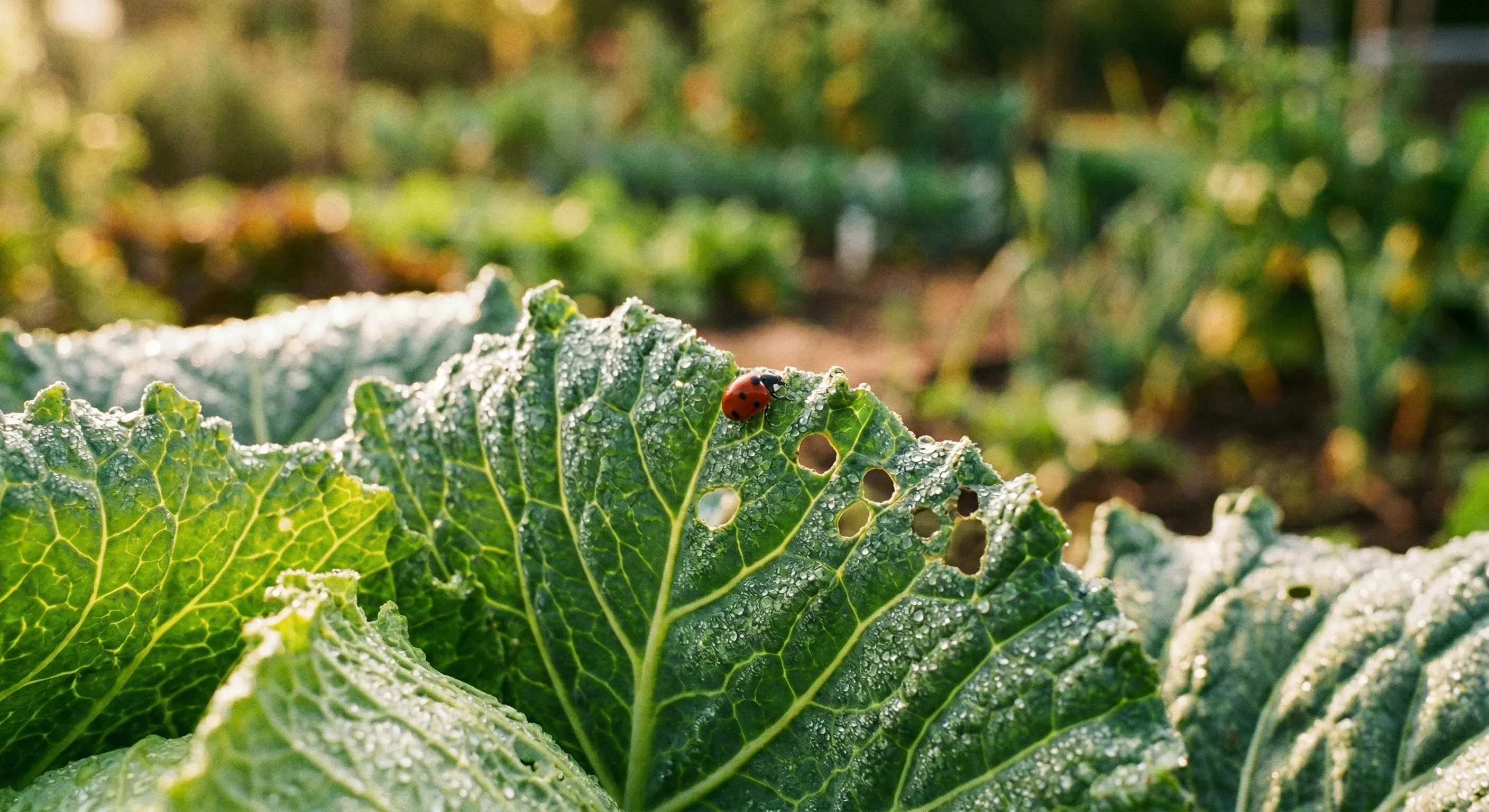
I did not set out to learn about garden pests. They introduced themselves, one ruined crop at a time.
My first serious vegetable garden was a disaster of mysterious holes, wilting leaves, and plants that simply vanished overnight. I had no idea what was eating what, and my attempts at control were random and mostly useless. I sprayed things. I picked things off. I moved things around. Nothing worked because I did not understand what I was dealing with.
It took several seasons of observation, a lot of reading, and more failed crops than I care to admit before I started recognising the patterns. Most vegetable garden pests are predictable. They show up at the same time each year, attack the same crops, and leave distinctive calling cards. Once you learn to read those signs, you can respond before the damage gets serious.
Here is what I have learned about the most common pests in a vegetable garden, how to identify them, and what actually works to keep them in check.
At a glance
| Pest | Damage signs | Main crops affected | Best organic control |
|---|---|---|---|
| Slugs and snails | Irregular holes, slime trails, seedlings vanishing overnight | Lettuce, beans, courgettes, strawberries | Beer traps, evening patrols, wool pellets, encourage predators |
| Aphids | Clusters on shoot tips, curled leaves, sticky honeydew | Broad beans, roses, brassicas | Encourage ladybirds, squash by hand, water blast |
| Cabbage white caterpillars | Large ragged holes, skeletonised leaves, dark frass | Cabbages, kale, broccoli, Brussels sprouts | Fine mesh netting, hand-pick caterpillars, squash egg clusters |
| Carrot fly | Rusty brown tunnels in roots, yellowing foliage | Carrots, parsnips, parsley, celery | 60 cm mesh barrier, raised beds, sow after mid-May |
| Flea beetles | Tiny round holes in leaves, worst in dry weather | Brassicas, rocket, radishes, turnips | Fleece covers, keep seedlings well-watered, interplant with taller crops |
| Vine weevil | Notched leaf edges, wilting plants, white C-shaped grubs in soil | Strawberries, primulas, heucheras, cyclamen | Nematode drench, check pots for grubs, straw traps for adults |
| Whitefly | White clouds when disturbed, sticky honeydew, sooty mould | Greenhouse crops, brassicas | Encarsia formosa wasps, yellow sticky traps, good ventilation |
| Red spider mite | Fine webbing, stippled bronzed leaves | Cucumbers, aubergines, peppers, beans | Mist regularly, predatory mites, raise humidity |
Slugs and snails
If I had to name one pest that has caused me more grief than all the others combined, it would be slugs. They are everywhere, and they have an unerring instinct for eating the things you care about most.
The damage is easy to spot: irregular holes in leaves, often with a silvery slime trail nearby. Seedlings can disappear entirely overnight, leaving nothing but a stump. Slugs and snails feed mainly after dark and in damp conditions, which is why you can inspect your garden during the day and see nothing, then lose half a row of lettuce by morning.
Almost every crop is vulnerable when young, but slugs are especially fond of lettuce, beans, courgettes, hostas, and strawberries. Established plants can usually tolerate some damage, but seedlings have no chance.
For organic control, I have found that no single method works alone. You need a combination. Beer traps catch a surprising number. Wool pellets and copper tape around pots deter them. Watering in the morning rather than the evening means the soil surface is drier when slugs become active. Natural predators help too: frogs, toads, hedgehogs, and ground beetles all eat slugs, and encouraging them makes a real difference over time. The most effective method, though not the most pleasant, is going out after dark with a torch and picking them off by hand. I record slug damage in my garden journal now, and the patterns are clear: the worst years are always the wet ones.
Aphids
Aphids are the pest you will notice most often, partly because they are so visible. Clusters of tiny soft-bodied insects, usually green but sometimes black, white, or pink, massed on the tips of new growth and the undersides of leaves. They suck sap, weaken the plant, and excrete sticky honeydew that attracts sooty mould.
Broad beans are a magnet for blackfly, which colonise the growing tips in late spring. Roses, nasturtiums, and brassicas are also frequent targets. The damage shows as curled or distorted leaves, stunted growth, and that telltale sticky residue.
The good news is that aphids have many natural enemies. Ladybirds, hoverfly larvae, lacewings, and parasitic wasps all eat them in enormous quantities. The single best thing you can do is encourage these predators by planting flowers among your vegetables and avoiding broad-spectrum sprays that kill everything. I grow calendula and phacelia through my beds partly for this reason, and partly because they look good. Companion planting is worth exploring if you have not already. I wrote more about it in the companion planting guide.
For immediate control, squash small colonies by hand or blast them off with a strong jet of water. On broad beans, pinching out the growing tips once the lowest flowers have set removes the aphids’ favourite feeding site and encourages the plant to put energy into the pods.
Cabbage white caterpillars
If you grow brassicas, you will meet the cabbage white butterfly. The adults are the familiar white butterflies you see fluttering around the garden in summer. They lay clusters of yellow eggs on the undersides of brassica leaves, and the caterpillars that hatch are voracious.
The damage is unmistakable: large, ragged holes in the leaves of cabbages, kale, broccoli, and Brussels sprouts. A serious infestation can reduce a plant to a skeleton of veins in a matter of days. You will also find dark green droppings (frass) scattered over the leaves.
Prevention is far easier than cure. Fine mesh netting (Enviromesh or similar) draped over your brassicas from the moment you plant them out will stop the butterflies from laying eggs. This is the single most effective method I have found. If caterpillars do get through, pick them off by hand and check the undersides of leaves for egg clusters, which you can squash before they hatch.
I lost an entire bed of kale in my second year of growing because I did not net it. That was a mistake worth recording, and I have not repeated it since.
Know when pests arrive in your garden.
Free for up to 30 plants. No card needed.
Carrot fly
Carrot fly is one of those pests you do not see until the damage is done. The adult is a small, low-flying fly that lays eggs near the base of carrot plants. The larvae burrow into the roots, leaving rusty brown tunnels that ruin the crop.
The first sign is often the foliage turning reddish or yellow. By the time you pull the carrots and see the tunnels, it is too late for that batch. Parsnips, parsley, and celery are also susceptible.
Carrot fly is a weak flier, though. A barrier of fine mesh or fleece around 60 centimetres high will keep them out, since they rarely fly above that height. Alternatively, grow carrots in raised beds or containers above ground level. Timing helps too: sowing after mid-May avoids the first generation of flies, and harvesting before September avoids the second.
I grow my carrots in a raised bed surrounded by a mesh barrier, and the difference compared to my early unprotected attempts is remarkable. Clean, tunnel-free roots every time.
Flea beetles
Tiny, shiny beetles that jump when disturbed, flea beetles chew small round holes in the leaves of brassicas, rocket, radishes, and turnips. The damage looks like someone has taken a hole punch to the foliage. On established plants this is mostly cosmetic, but on young seedlings it can be fatal, especially in dry weather when the plants are already stressed.
Flea beetles thrive in hot, dry conditions. Keeping seedlings well-watered and growing strongly helps them outpace the damage. Fleece or mesh covers protect vulnerable crops during the worst period in late spring and early summer. Interplanting with taller crops can also help by creating shade and disrupting the beetles’ ability to find their target plants.
Track what is eating your plants.
Free for up to 30 plants. No card needed.
Vine weevil
Vine weevil is primarily a problem for container gardeners, though it can affect plants in the ground too. The adults are nocturnal beetles that eat distinctive notches from the edges of leaves, but the real damage is done by the larvae: fat, white, C-shaped grubs that live in the soil and eat roots.
You often do not realise there is a problem until a plant suddenly wilts and collapses despite being well-watered. When you tip it out of the pot, you find the roots have been eaten away and the compost is full of grubs. Strawberries, primulas, heucheras, and cyclamen are favourite targets, but vine weevil will attack a wide range of plants.
For organic control, biological nematodes (Steinernema kraussei) applied as a drench in spring or autumn are highly effective against the larvae. Check pots regularly and remove any grubs you find. The adults can be trapped by placing upturned pots stuffed with straw near affected plants and checking them each morning.
Whitefly
Whitefly are tiny white-winged insects that rise in a cloud when you disturb an infested plant. They are most common in greenhouses and polytunnels but can also affect outdoor brassicas in warm weather. Like aphids, they suck sap and excrete honeydew.
Greenhouse whitefly can be controlled biologically with the parasitic wasp Encarsia formosa, which is widely available by mail order. Yellow sticky traps help monitor and reduce populations. Good ventilation in the greenhouse makes conditions less favourable for whitefly, which prefer still, warm air.
Outdoors, cabbage whitefly is common on brassicas through autumn and winter. The damage is usually cosmetic rather than serious. Washing the leaves thoroughly at harvest removes most of them.
Red spider mite
Red spider mite is another pest that thrives in hot, dry conditions, particularly in greenhouses. Despite the name, they are tiny and usually yellowish-green, only turning red in autumn. You are more likely to notice the fine webbing they spin on the undersides of leaves, and the stippled, bronzed appearance of the foliage.
Cucumbers, aubergines, peppers, and beans are common targets. The mites suck sap from the leaves, causing them to lose colour and eventually drop. In severe infestations, the webbing can cover entire plants.
The key to prevention is humidity. Red spider mite hates damp conditions. Misting plants regularly, damping down greenhouse floors, and ensuring good air circulation all help. The biological control Phytoseiulus persimilis, a predatory mite, is very effective in enclosed spaces. Outdoors, the problem is usually less severe because natural predators and rain keep populations in check.
I get red spider mite on my greenhouse cucumbers most summers. Misting the foliage daily and introducing predatory mites in June has kept it manageable.
Building a picture over time
Pest problems are rarely random. The same pests tend to appear at the same time each year, on the same crops. Recording what you see, when you see it, and which plants are affected turns isolated observations into useful knowledge.
After a few seasons of notes, you start to anticipate problems rather than react to them. You know to net the brassicas before the cabbage whites arrive, and to check the broad bean tips for blackfly in May. You learn which corner of the garden is the slug highway.
This is the kind of practical knowledge that no book can give you, because it is specific to your garden and your local conditions. The only way to build it is to pay attention and write it down. A few words after each observation is enough. Over time, those notes become more useful than any guide.