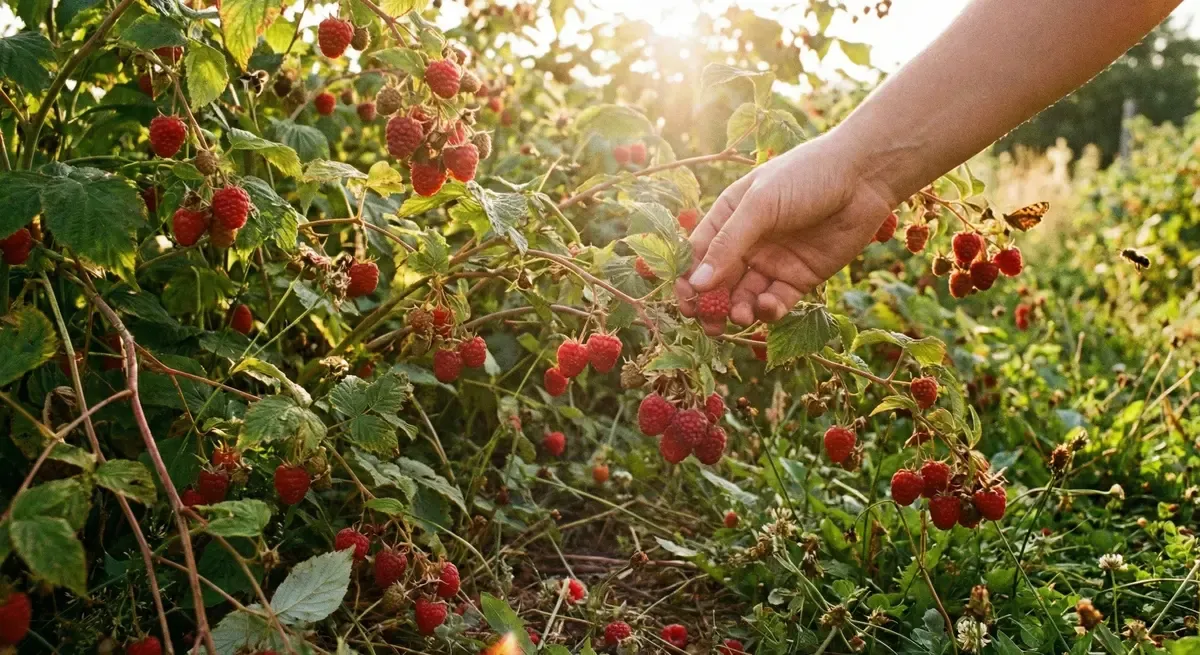
The mystery raspberry patch
Somewhere in my raspberry patch there are at least three varieties. I know this because some canes fruit in July, others in September, and a few seem to produce twice. But which canes belong to which variety? They have all merged into one thorny mass, spreading into each other’s space, and I cannot tell where one ends and another begins.
Last winter I pruned the whole lot to the ground. It felt efficient. Clean. A fresh start. What I did not realise is that this was exactly right for the autumn-fruiting varieties and completely wrong for the summer ones. The autumn raspberries came back strong and produced well. The summer ones spent the year growing new canes and gave me nothing.
This is the berry bush tracking problem: soft fruit bushes are permanent plants, but they are rarely treated that way. We obsess over tomato varieties and pepper yields, but the fruit bushes just sit there, doing their thing, until something goes wrong and we realise we have no idea what we are looking at.
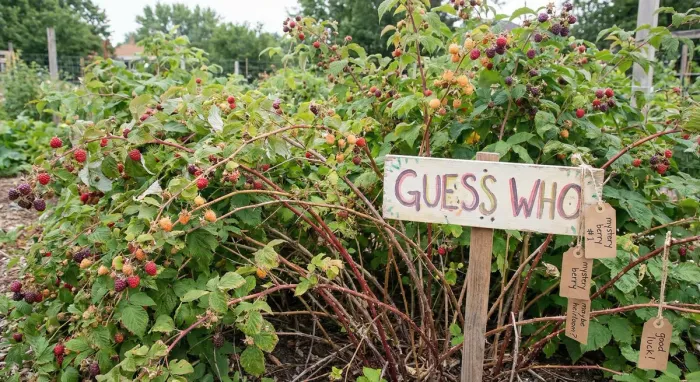
Why berry bushes need tracking
Unlike annual vegetables that get cleared and replanted each year, berry bushes stay in one place for a decade or more. They accumulate history. The problem is that history lives only in your head, and heads are not reliable.
Varieties get mixed up. Raspberries sucker and spread. Currant cuttings get planted without labels. After a few years, you are guessing. And when you guess wrong, you prune wrong, feed wrong, or remove the wrong bush when thinning.
Pruning depends on knowing what you have. Summer-fruiting raspberries produce on last year’s wood. Cut that wood, lose the fruit. Autumn-fruiting raspberries produce on this year’s wood. Leave old canes standing, and you get a tangled mess. Blackcurrants fruit best on young wood and need old branches removed. Redcurrants and gooseberries fruit on older spurs and need a different approach entirely.
Yield varies by variety. Some bushes produce reliably every year. Others are disappointing. Without records, you cannot tell which is which, and you might remove your best performer while keeping the underachiever.
Bushes have lifespans. They do not last forever. A raspberry patch that produced well for ten years will start declining. If you do not know how old it is, you cannot plan ahead. You just wake up one summer to thin pickings and no replacement plants ready.
What to track for each bush type
Different soft fruits have different needs. Here is what matters for each.
Raspberries
The critical thing is knowing whether a variety is summer-fruiting or autumn-fruiting. Get this wrong and your pruning will be backwards.
- Variety name and type (summer or autumn)
- Planting date (raspberries peak around years 3-6, then slowly decline)
- Location in the patch (so you can tell them apart)
- Pruning dates and what you did (cut all canes? only fruited ones?)
- Yield observations (heavy crop? disappointing? signs of virus?)
Summer types like Glen Ample or Malling Promise fruit on floricanes, which are canes that grew last year. After harvest, you cut out only the canes that fruited and tie in the new ones. Autumn types like Autumn Bliss or Polka fruit on primocanes, which are this year’s growth, and get cut to the ground in late winter.
If you have both types mixed together without labels, you will eventually prune one group correctly and destroy the other.
Blueberries
Blueberries are fussier about soil and need specific conditions to thrive.
- Variety name (affects pollination and ripening time)
- Pollination partners (most blueberries fruit better with a different variety nearby)
- Soil pH measurements (they need acidic soil, pH 4.5-5.5)
- Feeding schedule (they need ericaceous fertiliser)
- Yield each season (declining yields often mean pH has drifted)
A blueberry bush that suddenly stops fruiting well is often telling you something about soil conditions. If you have records of past yields and feeding, you can spot the pattern.
Currants (black, red, and white)
Black currants and red currants look similar but need very different pruning.
- Variety and colour (black, red, or white)
- Pruning regime (black currants: remove old wood; red and white: keep permanent framework)
- Yield observations (black currants decline after about 10 years)
- Health notes (black currants can carry blister aphid; some varieties are resistant)
Black currants fruit best on young wood. Each winter, you remove about a quarter of the oldest branches to encourage new growth from the base. Red and white currants fruit on permanent spurs on older wood, more like gooseberries. Pruning them like black currants removes the fruiting wood.
Gooseberries
Gooseberries are thorny and awkward, but they produce for years if managed well.
- Variety (cooking vs dessert, thorned vs thornless)
- Mildew resistance (some varieties like Invicta are resistant; others suffer badly)
- Training method (bush, cordon, or standard?)
- Pruning notes (when you opened up the centre, how it responded)
Mildew is the main problem with gooseberries. If you record which varieties suffer and which stay clean, you know what to plant more of.
Blackberries and hybrid berries
Blackberries, tayberries, loganberries, and boysenberries are vigorous and can become unmanageable without attention.
- Variety (thornless varieties like Loch Ness are much easier to manage)
- Training system (fan, weave, or just chaos?)
- Pruning dates (cut out fruited canes after harvest, tie in new ones)
- Spread observations (are they staying put or taking over?)
Blackberries fruit on last year’s growth, so the pruning pattern is like summer raspberries: remove what fruited, keep what grew this year.
Tracking yields: why it matters
You do not need laboratory precision. “Three bowls” or “enough for jam” is better than nothing. You are looking for patterns, not perfect data.
What yield tracking tells you:
Which varieties perform. After a few years, you will know which raspberry variety fills bowls and which barely covers the bottom. You can propagate the good ones and phase out the disappointments.
When a bush is declining. A gradual drop in yield over several years suggests a bush is reaching the end of its productive life. A sudden drop suggests disease, environmental stress, or pruning error.
Whether your care makes a difference. Did feeding the blueberries improve yield? Did mulching the raspberries help? Without records, you are guessing. With records, you can see.
The simplest approach is to note something at harvest time. Even “good crop” or “poor crop” builds a picture over years.
The pruning record
Pruning soft fruit is not complicated, but it is easy to forget what you did. A simple log helps.
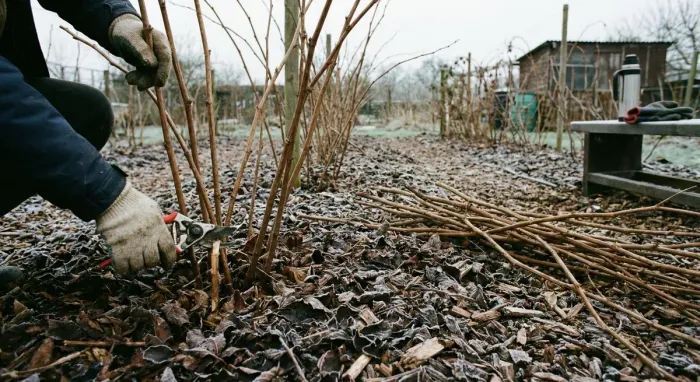
Record:
- When you pruned (date)
- What you removed (old canes, weak growth, congested branches)
- How the bush looked (overgrown? well-balanced? signs of disease?)
- What you left (how many new canes tied in, how open the centre is)
The real value comes next year, when you can see how the bush responded. Did opening up the centre reduce mildew? Did leaving more canes give more fruit or just more congestion? Over time, you learn what works for each bush.
For raspberries especially, noting which canes you kept and which you removed helps you identify the summer vs autumn types. If you cut everything and got no fruit, you now know that variety fruits on old wood.
Planning replacements
Soft fruit bushes do not last forever, and knowing their age helps you plan ahead.
Typical productive lifespans:
- Raspberries: 8-12 years before yields decline
- Currants: 10-15 years
- Gooseberries: 15-20 years
- Blueberries: 20+ years (often much longer)
If you planted raspberries five years ago and they are producing well, you have a few more good years. But if you do not start replacement plants soon, you will have a gap when the old patch gives out.
This is where planting date records matter. “I think I planted them around 2018” is less useful than knowing exactly when.
Some gardeners stagger plantings: new canes every three years, so there are always mature plants and young replacements. This only works if you can tell them apart, which means keeping records.
Common tracking mistakes
A few patterns come up repeatedly when gardeners start tracking soft fruit.
Tracking the patch, not the plants. “Raspberries” is not useful. You need to track individual varieties, or at least clusters you can identify. If everything is lumped together, you cannot tell which variety is performing or which needs different care.
Forgetting to note variety at planting time. The label seems obvious when you plant. Three years later, buried under leaves and suckering canes, it is gone. Write it down immediately.
Recording only problems. It is tempting to log issues and ignore good years. But knowing that a bush has produced consistently for five years is valuable information when you are deciding what to propagate or replace.
Overcomplicating the system. You do not need a spreadsheet with 20 columns. Variety, planting year, pruning notes, and a rough yield impression are enough to transform your understanding of the patch.
How Leaftide tracks soft fruit
Leaftide treats each berry bush as a permanent plant with its own profile. No more mystery varieties.
Each bush gets a record. Name it, note the variety, record when it was planted and where it lives. Add a photo if it helps you identify it later.
Task history shows what you did. Every pruning session, feeding, or netting job can be logged with notes. “Cut all canes to ground, late Feb” tells you this is an autumn-fruiting raspberry. “Removed oldest third of branches” tells you it is a blackcurrant.
Yield notes build over time. When you harvest, log it. After a few seasons, you can compare varieties and spot declining bushes before they fail completely.
Reminders keep you on schedule. Set a reminder for winter pruning, another for netting before the birds arrive, another for the ericaceous feed the blueberries need. The system prompts you at the right time.
The goal is not to create paperwork. It is to have the information when you need it: when you are standing in front of a raspberry patch in February, secateurs in hand, wondering what to cut.
Most gardeners forget what they planted and when.
Track every berry bush in your garden with variety records, pruning history, and yield notes, so you always know what you have and how to care for it.
Free for up to 30 plants. No card needed.
Sources and further reading
This guide draws on established soft fruit growing practice from the following sources:
Royal Horticultural Society (RHS):
General soft fruit guidance:
Lifespans and yield expectations are general guides. Your results will vary based on variety, soil, climate, and care.